





By Greg Kowalczyk · GearTOP · LinkedIn
Here's the uncomfortable truth about most bucket hats: they are fashion accessories masquerading as sun protection. That $15 cotton bucket hat from the boardwalk gift shop? It might block less than 15% of UV radiation, especially when it's stretched, damp, or months old.
A real sun-protective bucket hat — one that actually shields your face, ears, and neck from UV damage — needs specific design features that fashion brands rarely bother with. This guide breaks down exactly what separates the real thing from the impostor.
Quick Answer: What Makes a Bucket Hat Sun-Protective?
Three non-negotiables: UPF 50+ certification (blocks 98% of UV radiation), a brim of at least 2.75 inches all the way around, and tightly woven fabric that doesn't become transparent when stretched or wet. Without all three, you're wearing shade. Not sun protection.
Bucket Hat vs. Booney Hat vs. Wide Brim: What's the Difference for Sun Protection?
These terms get thrown around interchangeably, but they're not the same — and the differences matter for UV coverage.
| Feature | Fashion Bucket Hat | UPF Booney / Outdoor Hat | Wide Brim Sun Hat |
|---|---|---|---|
| Brim width | 1.5–2.5 inches | 2.75–3.5 inches | 3–5+ inches |
| UPF rating | Usually none | UPF 50+ certified | UPF 50+ certified |
| Chin strap | Rarely | Almost always | Often |
| Ventilation | Minimal or none | Mesh panels standard | Eyelets or mesh |
| Neck coverage | Partial at best | Good (some have removable flaps) | Excellent with full brim |
| Best for | Errands, style | Hiking, fishing, paddling | Gardening, beach, all-day outdoor |
| Packability | Good (soft crown) | Good (crushable) | Varies |
Shop Navigator UPF 50+ Shop Discoverer (neck flaps) Shop all sun hats
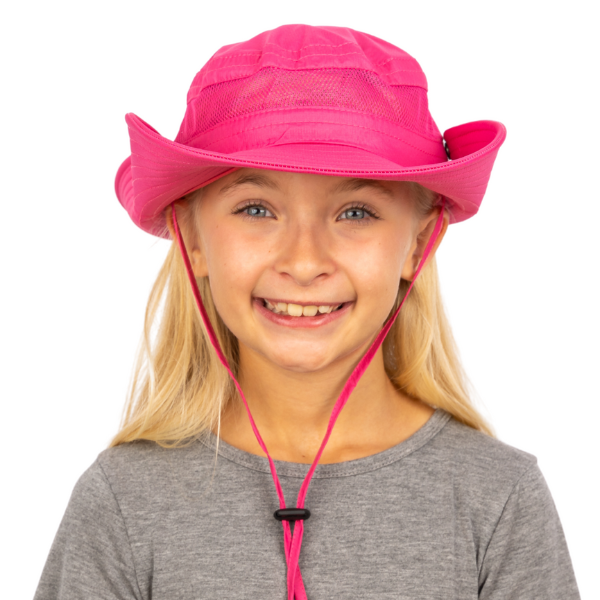
The booney hat — what outdoor brands sometimes call a "bucket hat" in their sun-protection lines — is really a different category. As Columbia's principal apparel designer Meghan Baldys puts it: "A booney hat is more of a hat you wear hiking on the trail or on the river." It prioritizes performance over fashion. A true bucket hat prioritizes style. The sweet spot is a hat that does both.
4 Things Every Sun-Protective Bucket Hat Needs
1. UPF 50+ — Not Optional
UPF (Ultraviolet Protection Factor) measures how much UV radiation passes through fabric. UPF 50+ means the fabric blocks at least 98% of UVA and UVB rays. A standard cotton t-shirt provides roughly UPF 5–10. A UPF 50+ hat provides 10x the protection.
Here's the catch: UPF is a fabric rating, not a design rating. A hat can be labeled UPF 50+ but still leave your neck exposed because the brim is too short. You need both the fabric rating AND the coverage.
2. Brim Width: 2.75 Inches Minimum
According to the Australian Radiation Protection and Nuclear Safety Agency (ARPANSA) — arguably the world's most stringent sun-safety authority — bucket hats need a brim that shades the face, ears, and back of the neck. Anything under 2.5 inches is cosmetic. At 2.75–3.5 inches, you get meaningful protection. At 4+ inches, you're in full-coverage territory.
A quick test: put the hat on, stand in direct sun, and look at your shadow. Can you see your ears or the back of your neck exposed? If yes, the brim is too short.
3. Chin Strap or Adjustable Fit
Wind is the enemy of sun protection. A gust takes your hat, and suddenly your scalp is unprotected. A chin strap — or at minimum an internal drawstring — keeps the hat on your head when you need it most. This matters especially for boating, fishing, hiking ridges, and anywhere wind is a factor.
4. Fabric That Actually Blocks UV
Not all fabric is created equal. Tightly woven nylon and polyester blends with UV-inhibiting treatments outperform cotton every time. A wet cotton hat can lose up to 50% of its UV protection. Synthetic blends and treated fabrics hold their UPF rating even when damp. If you are going to sweat, get wet, or wash the hat frequently, skip cotton.
Why Most Fashion Bucket Hats Fail at Sun Protection
Three reasons, and they are almost universal in the sub-$30 fashion category:
- No UPF certification. If the tag doesn't say UPF 50+, assume it's not. Testing costs money, and fashion brands selling $20 hats don't pay for it.
- Thin, loosely woven cotton. Hold the hat up to a lightbulb. If you can see light through the weave, UV is getting through too. A certified UPF hat will appear nearly opaque.
- Brims designed for silhouette, not shade. A 1.5-inch brim angled upward looks great on Instagram. It provides almost zero protection for your ears or neck.
The Australian government's SunSmart program is blunt about this: "Baseball caps do not protect the neck and ears. Bucket hats with a wide brim and legionnaire style hats provide the most protection." The keyword is "wide brim."
How to Choose: Activity-Based Decision Guide
| Activity | Best Hat Type | What Matters Most | GearTOP Pick |
|---|---|---|---|
| Hiking / trail | Boonie with chin strap | Ventilation, wind resistance, UPF 50+ | Discoverer |
| Fishing / boating | Boonie with neck flap | Water reflection coverage, chin strap, quick-dry | Discoverer (neck flap model) |
| Gardening / yard work | Wide brim or bucket | All-day comfort, full neck coverage | Navigator |
| Beach / pool | Wide brim, packable | Water resistance, salt/sand tolerant | Navigator |
| Everyday / errands | UPF bucket with 3" brim | Style + function, looks normal in town | Discoverer Air |
| Running / high-output | Lightweight cap + UPF gaiter | Breathability, moisture-wicking | Navigator + neck gaiter combo |
The Complete Sun Protection Stack
A hat alone is not enough. Even a UPF 50+ bucket hat with a 4-inch brim leaves your lower face, arms, and legs exposed. The full system:
- UPF 50+ hat — Your first line of defense for face, ears, and neck
- Broad-spectrum SPF 30+ sunscreen — On all exposed skin, reapplied every 2 hours
- Sunglasses with UV 400 protection — Your eyes and eyelids need protection too
- UPF-rated clothing — Long sleeves and pants for extended outdoor exposure
- Know your burn time — The SunUp app calculates your personal burn time based on your skin type, the local UV index, and whether you've applied sunscreen. It also tells you when to reapply. Free for iOS.
This stack is not overkill. Skin cancer is the most common cancer in the United States, and the Skin Cancer Foundation estimates that regular daily use of SPF 15+ sunscreen reduces melanoma risk by roughly 50%. A hat is step one. But it is not the only step.
Frequently Asked Questions
Do bucket hats actually protect you from the sun?
Only if they have a certified UPF 50+ rating and a brim of at least 2.75 inches. A fashion bucket hat made of thin, untested cotton provides minimal UV protection — comparable to wearing a light t-shirt on your head. Check the label. No UPF rating, no sun protection guarantee.
What UPF rating should a sun hat have?
UPF 50+ is the highest rating available and what you should look for. It means the fabric blocks at least 98% of UVA and UVB radiation. UPF 30 (blocks ~96.7%) is acceptable but not ideal. Anything below UPF 15 is not considered sun-protective by any medical standard.
What's the difference between a bucket hat and a booney hat?
Booney hats have wider brims (typically 3+ inches), chin straps, ventilation mesh, and are built for outdoor performance — hiking, fishing, paddling. Bucket hats have taller crowns, narrower brims (often 1.5–2.5 inches), and are designed primarily as fashion accessories. The line blurs with UPF-certified outdoor bucket hats that borrow features from both categories.
Can I wear a bucket hat hiking?
You can, but a standard fashion bucket hat will fail in three ways: the brim catches wind and flips up, there is no chin strap to keep it on, and the fabric lacks ventilation — your head will overheat. Look for a booney-style outdoor hat with UPF 50+, mesh panels, and a chin strap. That's the hiking-ready version of the bucket hat concept.
How do I know if my hat has real UPF protection?
Look for a sewn-in tag or hangtag that explicitly states "UPF 50+" or shows a UPF rating number. If the tag only says "UV protective" or "sun blocking" without a rating number, it has not been tested. Brands that invest in UPF certification display it prominently — it is a selling point, not an afterthought.
Does a wet hat lose sun protection?
It depends on the fabric. Cotton loses significant UV-blocking ability when wet — the water fills the gaps between fibers and allows more UV to pass through. Tightly woven synthetics (nylon, polyester) with UV-inhibiting treatments are much less affected. If you are going to sweat heavily or be near water, choose a synthetic UPF hat over cotton.
Are expensive sun hats worth it?
The price difference between a $20 untested bucket hat and a $50–60 certified UPF 50+ hat reflects testing, materials, and durability. A certified hat lasts multiple seasons. A fashion hat degrades in one. You're not paying for the brand name. You're paying for the lab tests that verify the protection level the tag claims.
Does hat color affect UV protection?
Darker colors absorb more UV radiation, which means less reaches your scalp. But the difference is modest compared to fabric density and UPF treatment. A dark, loosely woven hat still lets more UV through than a light-colored, tightly woven UPF 50+ hat. Prioritize fabric and certification over color.
Bottom Line
Your bucket hat is either sun protection or it's a fashion accessory. It cannot be both unless it's built for the job. If the label says UPF 50+, the brim measures at least 2.75 inches, and the fabric is tightly woven synthetic — wear it and trust it. If not, treat it like what it is: shade for your forehead, and nothing more.
Check your burn time before you head out. SunUp tells you exactly how long you can safely stay outside based on your skin type, the UV index, and your protection layers. Because the best sun hat is the one you're wearing — but only if it actually works.
UV clothing guidance: Skin Cancer Foundation — sun-protective clothing.


Leave a comment (all fields required)