





By Greg Kowalczyk · GearTOP · LinkedIn
Quick answer: You rarely need a specialty "cooling" hat. A ventilated UPF 50+ wide-brim hat with a wicking sweatband beats most evaporative gimmicks for all-day heat — without rewetting every 30 minutes.
Shop Navigator UPF 50+ Shop Discoverer (neck flaps) Shop all sun hats
You don't need a $40 "cooling hat" with proprietary evaporative tech to stay comfortable in the sun. You need a hat with the right material, the right ventilation, and a UPF rating that actually blocks UV — ideally for under $25.
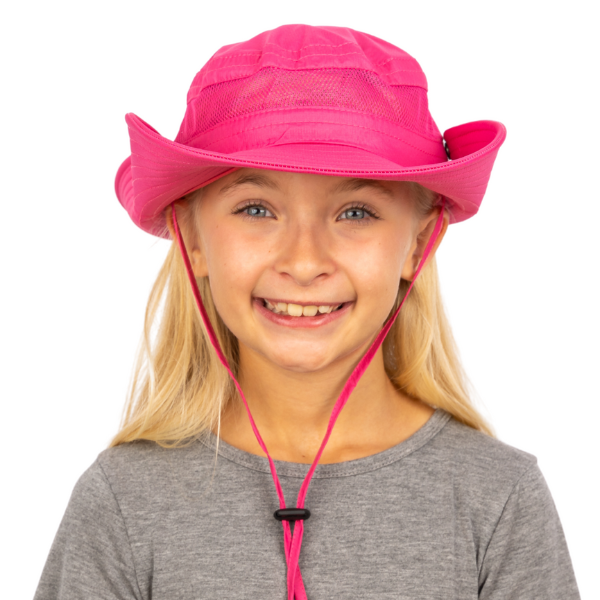
This guide breaks down what makes a sun hat genuinely cooling, which features actually matter, and why the GearTOP Wide Brim Sun Hat — rated #1 by NBC News Select and backed by 27,000+ reviews — delivers better value than "cooling" brands at twice the price.
What Makes a Sun Hat "Cooling"?
There are two completely different answers to this question, and most buyers don't realize they're shopping across two categories:
- Evaporative cooling hats — These use special fabric (usually PVA or polymer-based) that you wet with water. As the water evaporates, it pulls heat from your head. Brands like Mission built their entire line on this. The catch: they stop working once they dry out. On a 3-hour hike in low humidity, you're rewetting every 30–45 minutes.
- Ventilated UPF hats — These don't claim "active cooling." They keep you cool the old-fashioned way: letting hot air escape through mesh panels, wicking sweat off your forehead, and blocking UV before it hits your skin. No rewetting required. Works the same at hour one and hour six.
The best approach for most people? A ventilated UPF 50+ hat with a wide brim. It's less fuss and the protection doesn't fade.
Do Cooling Hats Actually Work?
Evaporative cooling hats do work — in the right conditions. Wet the fabric, and as water evaporates it can lower the surface temperature of the hat by 20–30°F compared to ambient air. That's real. Mission's lab tests and independent reviews confirm it.
But there's nuance the marketing glosses over:
- They work best in dry heat. In humid conditions (think: Florida in July, or anywhere above 70% humidity), evaporation slows to a crawl. The cooling effect drops dramatically.
- They need constant rewetting. Most stay effective for 30–60 minutes. On a long hike, you're burning through water just to keep your hat working.
- The cooling is on your head only. It feels great on your scalp, but does nothing for your face, ears, and neck — which is where most UV damage happens.
For most outdoor activities, a well-ventilated UPF 50+ hat with a 3-inch or wider brim provides more consistent, lower-maintenance protection than any evaporative hat.
The 4 Features That Actually Keep You Cool
Forget the marketing claims. These are the four things that determine whether a sun hat keeps your head comfortable or turns into a sweaty mess:
1. Ventilation: Mesh panels beat everything
Your head releases a surprising amount of heat. A hat without ventilation traps it. Look for mesh panels on the crown or eyelets that create airflow. The GearTOP Wide Brim uses polyester mesh side panels that let heat escape while keeping the brim structure solid. It's the same principle as a running cap — but with full UV coverage.
2. Brim size: 3 inches minimum
The Skin Cancer Foundation recommends at least a 3-inch brim all around for meaningful protection. A 2.5-inch brim on a baseball cap shades your forehead and nothing else. A 3.5–4 inch brim shades your face, ears, and the top of your neck. That's where most skin cancers develop.
Wider brims also create a micro-climate of shade — the air under a 4-inch brim is measurably cooler than direct sun on your skin.
3. Fabric weight and color
Dark colors absorb more UV (better protection) but also absorb more heat. Light colors reflect heat but let slightly more UV through. The sweet spot for the crown (the part touching your head): light-colored, lightweight polyester or nylon with a UPF rating. The UPF rating means the fabric itself blocks UV regardless of color.
Pro tip: hold any hat up to a bright light. If you can see pinpricks of light through the weave, UV is getting through too. Tight weave matters more than the UPF label.
4. Moisture management
A sweatband that actually wicks — not just absorbs — makes a bigger difference than any "cooling" feature. When sweat sits on your forehead inside a hat band, you feel hotter because evaporation is blocked. A proper wicking band pulls moisture outward where it can actually evaporate.
Cooling Sun Hat vs. Standard UPF Hat: What's the Tradeoff?
| Feature | Evaporative Cooling Hat | Ventilated UPF Hat (GearTOP-style) |
|---|---|---|
| Cooling mechanism | Water evaporation (active) | Airflow + shade (passive) |
| Works without water | No — stops cooling when dry | Yes — works continuously |
| Humidity performance | Poor — evaporation stalls | Unaffected by humidity |
| UV protection | Varies by model (some as low as UPF 30) | UPF 50+ (blocks 98% of UV) |
| Brim coverage | Often baseball-cap style (2.5" bill) | 3.5–4" full brim + neck coverage |
| Price range | $25–$40 | $20–$25 |
| Best for | Short sessions, dry heat, athletes | All-day wear, any climate, full protection |
What the Experts Actually Recommend
NBC News Select's 2026 UPF hat roundup — built with input from three board-certified dermatologists — named the GearTOP Wide Brim Sun Hat their #1 Best Overall UPF Hat. Not a $60 Sunday Afternoons hat. Not a $295 Eric Javits. A $19.99 ventilated wide-brim with UPF 50+ and 27,000+ reviews.
The dermatologists' reasoning was straightforward: consistent, full coverage beats brand prestige. A UPF 50+ hat with a 3.7-inch brim worn every time you go outside protects you better than a $60 adventure hat you leave in the car because it looks dorky.
The SunUp app makes this easier — it shows your local UV index in real time and reminds you when to grab a hat before you walk out the door. Free on the App Store.
Who Needs a Cooling Sun Hat?
Specific use cases where cooling matters most:
- Gardeners: Hours bent over in direct sun. A wide-brim ventilated hat with a chin strap (so it stays on when you're looking down) is the right tool. Check the GearTOP gardening hat guide for specifics.
- Anglers: Reflective glare off water doubles your UV exposure. A dark underbrim (to absorb reflected light) matters as much as the UPF rating. The GearTOP Navigator has this built in.
- Hikers above treeline: UV increases ~4% per 1,000 feet of elevation. At 10,000 feet, you're getting roughly 40% more UV than at sea level. Full brim + neck coverage is non-negotiable.
- Runners: Weight and ventilation matter more than brim size. A lightweight cap with UPF fabric plus a neck gaiter is the practical solution. Track your UV exposure on long runs with the SunUp app.
One Thing Most Buyers Miss
Your hat's UPF rating only covers the fabric. It doesn't tell you anything about the gaps. A UPF 50+ baseball cap leaves your ears, neck, and the sides of your face fully exposed. That's roughly 60% of your head getting zero protection despite wearing a "UPF 50 hat."
The hat style — wide brim vs. cap vs. bucket — determines your actual coverage more than the UPF number on the tag. Choose the shape first, then verify the UPF rating.
FAQ
What is the best cooling sun hat?
For most people, a ventilated UPF 50+ wide-brim hat (like the GearTOP Wide Brim at $19.99) outperforms evaporative cooling hats for all-day use. If you specifically want evaporative cooling for short, intense sessions in dry heat, Mission's Cooling Sun Defender is the category leader — just know it needs rewetting every 30–60 minutes.
Do cooling hats work in humidity?
Evaporative cooling hats work poorly in high humidity. When the air is already saturated with moisture, water can't evaporate efficiently — and evaporative cooling depends entirely on evaporation. In humid conditions (above ~70% humidity), stick with a ventilated UPF hat.
What's the difference between UPF and SPF for hats?
UPF (Ultraviolet Protection Factor) measures fabric — how much UV passes through the material. SPF (Sun Protection Factor) measures sunscreen — how long it takes skin to burn. They aren't interchangeable. A UPF 50 hat blocks 98% of UV rays. SPF 50 sunscreen, applied correctly, does the same — but only for about 2 hours before it needs reapplication. The hat doesn't wear off.
Are expensive sun hats worth it?
Not for protection. UPF 50+ fabric technology is inexpensive — a $20 hat and a $60 hat can block the exact same 98% of UV. What you pay for above $25–30 is brand name, specific style (like packable straw), or specialty features like a built-in neck cape. For pure UV protection, price doesn't correlate with performance.
How do I know if my hat actually blocks UV?
Three checks: (1) Look for a UPF 50+ label from a reputable brand. (2) Hold the hat up to bright light — if you see pinholes of light through the weave, UV is getting through. (3) Check if the fabric feels dense and tightly woven. A loose, gauzy weave won't protect you even if there's a UPF tag sewn in.
Can I track my UV exposure to know when I need a hat?
Yes. The free SunUp app shows your local UV index in real time, gives personalized burn-time estimates based on your skin type, and sends alerts when UV hits levels where a hat becomes essential. Available for iPhone on the App Store.
UV clothing guidance: Skin Cancer Foundation — sun-protective clothing.


Leave a comment (all fields required)