





By Greg Kowalczyk · GearTOP · LinkedIn
Quick answer: Most people shopping a waterproof sun hat actually need a water-resistant, quick-dry UPF 50+ hat—not a plastic-feeling coated lid. Fully waterproof hats shed rain but trap heat. For fishing, hiking, gardening, and boat days, prioritize UPF 50+, roughly a 3-inch brim, a chin cord, and fabric that still protects when wet. Check live UV on getsunup.app before long sessions.
Product pages love the word “waterproof.” Wear one of those fully coated hats on a July trail or a flat afternoon on the water and you learn the real tradeoff fast: water stays out, sweat stays in.
This guide separates marketing labels from what actually keeps you dry and protected—so you buy a hat you will still be wearing at hour six, not stuffed in a pack by 10 a.m.
Waterproof vs water-resistant vs quick-dry
Three different products get mashed into one search query.
| Type | What it does in rain | Breathability | Best for |
|---|---|---|---|
| Waterproof (coated / membrane) | Blocks sustained wet for longer | Low — heat and sweat build fast | Cold rain, short exposure, no high-output hiking |
| Water-resistant (DWR) | Light rain and splashes bead off; long downpours eventually soak | Good when paired with vents | Most fishing, garden, beach, travel days |
| Quick-dry (minimal coating) | Gets wet, then dries in minutes | Highest | High-output hiking, running, hot paddling |
Unless you live in steady cold rain, water-resistant + quick-dry UPF fabric outperforms “fully waterproof” for all-day comfort. You stay cooler, sweat can move, and light weather still rolls off the crown and brim.
Shop Navigator UPF 50+ sun hat → Shop Discoverer (face & neck flaps) →
Does a wet sun hat still block UV?
Sometimes less than you think—especially with casual fabrics.
The Skin Cancer Foundation is blunt: regardless of UPF, clothing that gets stretched or wet loses some protective ability and becomes more transparent. Their clothing guide uses the everyday white T-shirt example—about UPF 7 dry, dropping to about UPF 3 wet—as a reminder that “I have fabric on my head” is not the same as rated protection.
What that means for hats:
- Open-weave straw and thin cotton are the worst when soaked—shape collapses, weave opens, UV sneaks through.
- Labeled UPF 50+ synthetics (polyester/nylon built for sun gear) are the practical wet-weather choice. Purpose-built UPF cloth is engineered for outdoor use wet or dry far better than a fashion cotton bucket.
- Coverage still wins. SCF wants roughly a 3-inch brim to shade face, ears, and neck zones where skin cancers cluster. A wet baseball cap fails twice: weak fabric science and zero rear coverage.
On water, bounce UV from the surface still hits under a short brim. Pair the hat with sunscreen on anything the fabric does not cover, and use a neck flap or gaiter when you are bent forward landing fish or weeding.
What actually works on the water
Fishing and boating add wind, spray, and reflected light. Guides almost never live in a sealed waterproof bucket all day. They run a stack that survives eight hours:
- UPF 50+ wide brim (~3"+) with a dark under-brim to cut glare
- Chin cord — wind takes unsecured hats; that is not theory
- Water-resistant / quick-dry crown that sheds spray and dries after a dunk
- Neck and ear coverage — flap hat or UPF gaiter when the sun is high or you lean over the gunwale
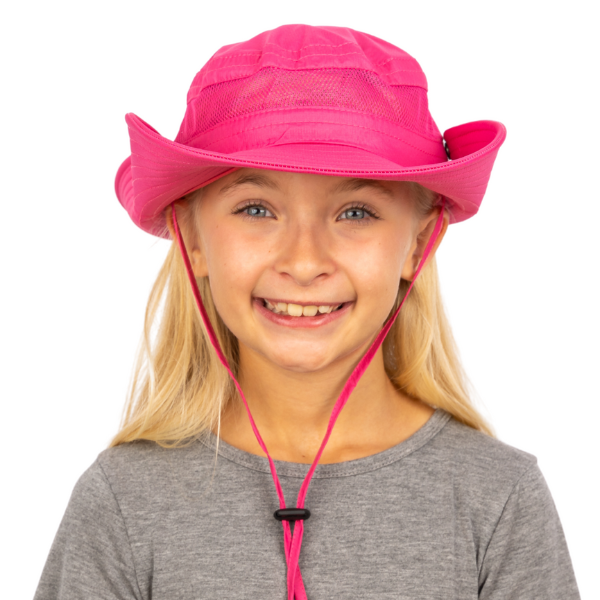
The GearTOP Navigator is the everyday water-resistant UPF 50+ workhorse (wide brim, chin cord, vents). When ears and nape need hard coverage on long boat days, step to the Discoverer with face and neck flaps. Heat-first days: Discoverer Air.
True waterproof membranes exist in the $60–$120 outdoor niche. Fine for cold rain. Miserable as your only July lid. Buy for the weather you actually have, not the Amazon keyword.
Hiking and gardening: breathability wins
Climb a grade in a coated waterproof hat and you invent a personal sauna. High-output and bent-over work need different priorities:
- Mesh or vented crown so heat can leave
- Wicking sweatband so salt does not run into your eyes
- Packability for hikers who stow the hat at tree line breaks
- Rear coverage for gardeners — nape burns hard when you are folded over beds for an hour
Deep dive the coverage problem in our sun hat with neck flap guide and brim geometry in the wide brim UV guide.
“Waterproof” straw and cotton hats
Straw is not waterproof. A spray-on DWR might bead water for a few outings, then the treatment washes off, the weave drinks moisture, the brim warps, and UV finds the gaps. Waxed cotton has the same lifecycle: works, then does not.
If the job is UV + occasional weather, start with synthetic UPF fabric and treat water resistance as a finish you can refresh—not a one-time magic label.
How to clean a water-resistant UPF hat without killing it
- Spot clean sweatband and stains with cold water and mild soap.
- Rinse well — leftover soap attracts grime and dulls DWR.
- Air dry in shade — skip the dryer; heat is hard on fabric and finishes.
- Reapply DWR (outdoor-gear sprays such as Nikwax or Grangers) when water stops beading.
- Store dry, out of baking sun in a hot car for months.
The $20–$40 value band
The market is barbelled: cheap unrated fashion hats on one end, logo-tax premium lids on the other. For a real UPF 50+ water-resistant hat with a usable brim and chin cord, the honest value band is roughly $20–$40. You are paying for rated cloth, hardware, and a shape you will wear—not a membrane you will hate in heat.
GearTOP’s Navigator and Discoverer line live in that band with UPF 50+ construction aimed at people who are actually outside. Browse the full set on the sun hats collection.
Frequently asked questions
Are sun hats actually waterproof?
Most are not fully waterproof. Many listings say "waterproof" when the hat is water-resistant (DWR finish that sheds light rain and splashes). Fully coated waterproof hats block water but trap heat and sweat, so they are a poor all-day summer choice for most hikers, gardeners, and anglers.
What is the difference between waterproof and water-resistant for a sun hat?
Waterproof means water does not pass through the fabric for a sustained period (coating or membrane). Water-resistant means light rain and splashes bead and roll off for a while, then may soak through in a long downpour. For warm-weather outdoor use, water-resistant UPF fabric with vents usually beats fully waterproof for comfort.
Does getting a sun hat wet reduce UV protection?
It can. The Skin Cancer Foundation notes that clothing that gets wet (or stretched) loses some protective ability and can become more transparent. A plain white cotton T-shirt is often cited around UPF 7 dry and about UPF 3 wet. Purpose-built UPF synthetics are designed to hold protection better wet or dry than casual cotton or open-weave straw—always check the labeled UPF and coverage, not fashion copy.
What material is best for a waterproof or wet-weather sun hat?
For true waterproofing: coated nylon/polyester (or a breathable membrane) with sealed construction—and accept more heat. For most fishing, hiking, and garden days: UPF 50+ polyester or nylon with a DWR finish, mesh vents, and a chin cord. That stack sheds splashes, dries fast, and stays wearable.
Can you wear a sun hat while swimming?
No standard sun hat is made for swimming. Water fills the crown, chlorine and salt age coatings, and the hat becomes heavy. For swimming, use a swim cap or water-resistant sunscreen on scalp and ears. For wading and splash zones, a quick-dry UPF hat that recovers after getting wet is the practical pick.
How long does DWR last on a water-resistant sun hat?
DWR wears with use, abrasion, detergent, and heat. When water stops beading, spot-clean, air-dry in shade, and refresh with a reputable DWR spray made for outdoor gear. Avoid the dryer—heat can hurt both fabric and finish.
Do I need a waterproof sun hat or is water-resistant enough?
For most people, water-resistant UPF 50+ is the better buy. You will actually wear a hat that breathes. Save fully waterproof lids for cold, steady rain or specialty conditions—and still pair with neck coverage and sunscreen on exposed skin.


Leave a comment (all fields required)