






Published April 4, 2026 · 8 min read
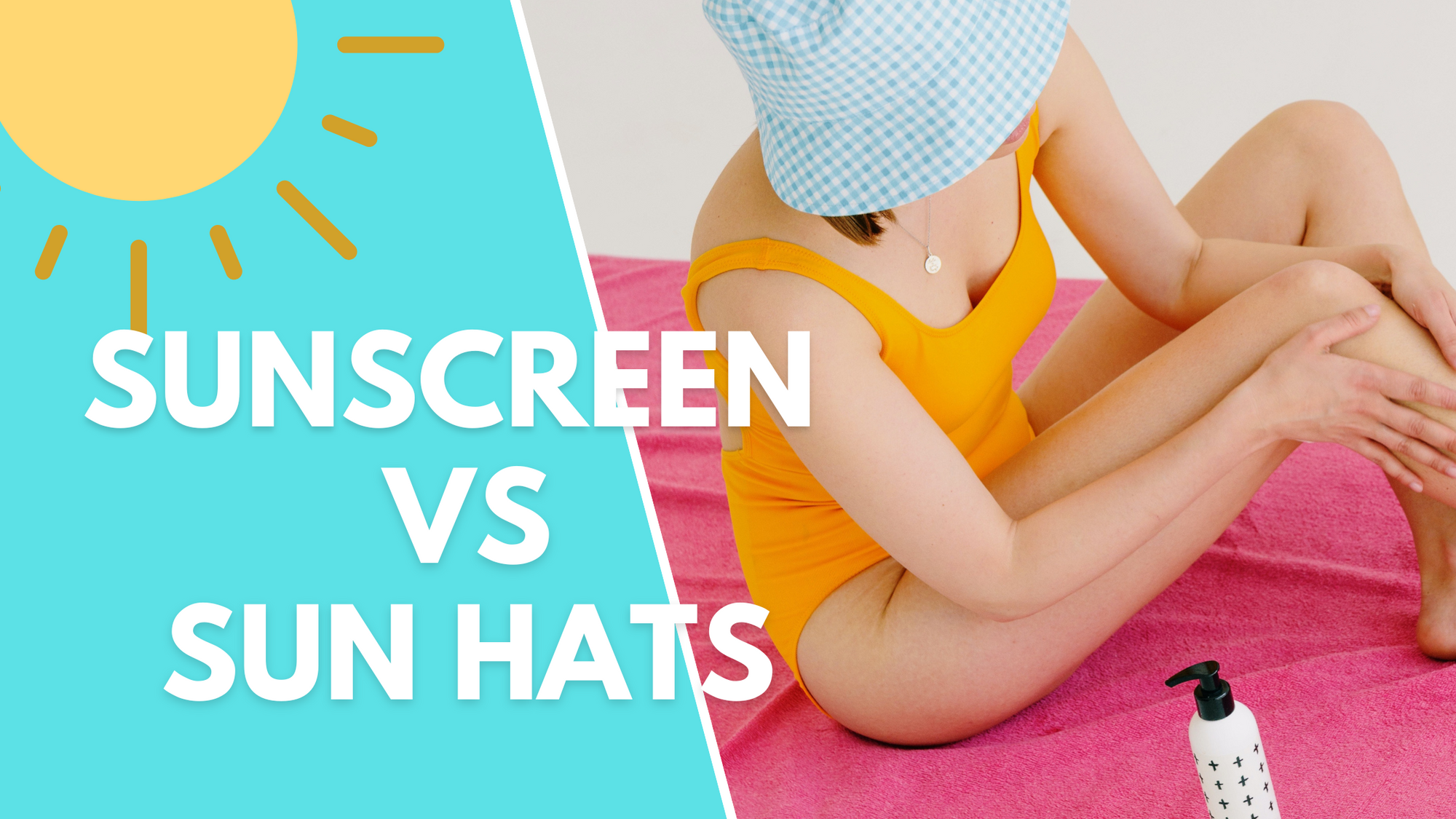
Sunscreen vs Sun Hats: Which Protects Better?
This question comes up often because people are looking for permission to do one thing instead of two. Sunscreen is a chore. Hats are easy. So the real question being asked is usually: "If I wear a hat, do I really need sunscreen?"
The honest answer is: it depends on what the hat covers and how long you're outside. A wide-brim hat does a lot of work. But it doesn't do everything. Here's where each fails, and how they work best together.
Where Sunscreen Fails
Sweat and Water Remove It
This is the biggest practical limitation of sunscreen for outdoor exercise. Most sunscreens are tested for SPF in lab conditions — applied generously, given 15 minutes to dry, then UV-measured without physical activity. In real use, heavy sweating physically removes sunscreen from the skin surface. Water-resistant formulations maintain their labeled SPF for 40–80 minutes of water exposure per FDA guidelines, but sweat resistance degrades in a similar timeframe.
A runner finishing a 90-minute morning run has typically sweated through most of the sunscreen they applied at the start. If they applied an adequate amount (1/4 teaspoon for the face, which is more than most people apply), they had reasonable protection for the first hour. By the end of the run, the effective SPF on their face may be SPF 5–10 — far from the labeled protection.
Application Errors Are Common
Studies consistently show that people apply 20–50% of the sunscreen amount used in SPF testing. Since SPF doesn't scale linearly with application amount, this matters: applying half the recommended amount doesn't give you half the SPF — it gives you roughly the square root of the SPF. SPF 30 applied at half the required amount produces effective protection closer to SPF 5–6.
Missed spots are also extremely common — ears, the back of the neck, the hairline, and the underside of the chin are frequently skipped.
Reapplication Is Forgotten
Dermatologists recommend reapplying sunscreen every 90–120 minutes during outdoor activity. Most people apply it once before heading out and don't bring the bottle. For half-day outdoor activities — a morning hike, a long run — sunscreen protection may be largely gone before the activity ends.
Where Sun Hats Fail
They Don't Cover Everything
A wide-brim hat provides excellent shade to the face, ears, and neck. It does nothing for the shoulders, arms, hands, nose when UV reflects from below, or any other exposed skin. If you're wearing a hat and a tank top, your arms and shoulders are unprotected.
Brim Geometry Has Limits
A hat brim shades from above. UV reflected off snow, water, sand, or concrete comes from below — and bypasses the hat entirely. In high-reflection environments (skiing, boating, beach), reflected UV reaches the lower face, under the nose, and the chin regardless of brim width.
Not All Hats Block UV
A hat without a UPF rating may let significant UV through the crown fabric itself. A loosely woven straw hat or light cotton cap with no UPF certification can have a UPF as low as 5–15. The brim provides shade; the crown may not block UV passing through from above. UPF 50+ certification is the standard to look for.
Head-to-Head Comparison
☀️ Sunscreen SPF 30+
Pros:
- Covers all exposed skin including arms, hands, face
- Works in any UV direction (from above, reflected, scattered)
- Available everywhere, cheap
Cons:
- Degrades with sweat during exercise
- Requires reapplication every 90–120 min
- Most people under-apply
- Easy to miss spots (ears, neck, under-chin)
🧢 UPF 50+ Wide-Brim Hat
Pros:
- Blocks 98% UV through fabric — doesn't degrade with sweat
- No reapplication needed
- Covers ears, neck, face consistently
- Also reduces heat on the head and face
Cons:
- Doesn't cover arms, shoulders, hands
- Doesn't protect from reflected UV below brim
- Only works for head/face area
The Right Combination for Outdoor Activity
| Activity | Hat Role | Sunscreen Role |
|---|---|---|
| Running (road, 1+ hour) | Face, ears, neck protection that won't sweat off | Shoulders, arms, any exposed skin below hat |
| Hiking (half day+) | Full brim coverage for face, neck, ears | Arms, hands, nose/chin for reflected UV |
| Water sports | Brim shading from direct UV | All exposed skin — water reflects 25% UV back up |
| Skiing / snowboarding | Limited (goggle interface) — balaclava better | Full face, especially under-chin and under-nose areas |
| Casual outdoor time (<30 min) | Hat may be sufficient | SPF on face adds margin if staying out longer |
The practical rule: wear a hat with a wide brim as the foundation, then add sunscreen to whatever the hat doesn't cover. This is more reliable than sunscreen alone because it removes the reapplication problem for the highest-exposure areas.
Why Outdoor Athletes Specifically Need Both
Runners, hikers, cyclists, and anglers get a unique combination of factors that make both hat and sunscreen necessary rather than optional:
- Extended exposure duration — a long trail run or fishing trip lasts longer than sunscreen does without reapplication
- High sweat rate — exercise accelerates sunscreen degradation significantly
- Reflective surfaces — water, sand, snow, and light-colored trails all reflect UV that bypasses a hat brim
- High cumulative UV load — someone who runs 30 miles per week spends 4–6 hours in UV per week, year after year
GearTop's wide-brim hats are designed to handle the hat side of this equation reliably — UPF 50+ fabric, moisture-wicking sweatbands that manage the sweat that would otherwise degrade nearby sunscreen, and brim geometry that actually shades the ears and neck. The SunUp app (free with any GearTop purchase) tracks UV index and estimated exposure time so you know when reapplication is actually needed.
Related Reading
- UV Protection Hat Buyer's Guide
- Why Wear a Sun Hat? 12 Reasons That Actually Matter
- 7 Best Sun Hats for UV Protection






Leave a comment (all fields required)