






By Greg Kowalczyk · GearTOP · LinkedIn
Quick answer: A sun hoodie is a lightweight, long-sleeve hooded shirt with a tested UPF rating, so the fabric blocks UV all day without reapplication. It covers your arms, torso, neck and ears. It does not cover your face. GearTOP's rule for a sun hoodie: pair it with a UPF 50+ wide-brim hat, sunscreen on whatever is still exposed, and a quick look at the UV index before you head out.
What Is a Sun Hoodie (And Why Does It Work)?
A sun hoodie is a long-sleeve hooded shirt built and lab-tested for UV protection, rated by its Ultraviolet Protection Factor (UPF). Regular long sleeves let UV through the weave; a rated sun hoodie tells you on the tag how much gets through.
The advantage over sunscreen: fabric doesn't sweat off, doesn't need reapplying, and covers places you forget — the back of your neck, the tops of your ears, the part in your hair.
The stakes are real: at least 1 in 5 Americans will develop skin cancer by age 70, according to the Skin Cancer Foundation. UPF clothing is one of the easiest ways to cut lifetime UV exposure without changing your habits. You put it on once and you're covered all day.
UPF Ratings: What the Numbers Actually Mean
A UPF 50 fabric blocks 98% of the sun's rays and lets only 2% through, per the Skin Cancer Foundation. The math for other ratings works the same way: UPF 15 lets through about 1/15th of the UV, UPF 30 about 1/30th.
| UPF Rating | UV Blocked | Best For |
|---|---|---|
| UPF 15 | ~93% | Short urban walks, cloudy days, incidental exposure |
| UPF 30 | ~97% | Most hiking, trail running, everyday outdoor activity |
| UPF 50+ | ~98% | All-day exposure, high altitude, water sports, equatorial travel |
Here's the trade-off most guides skip: higher UPF usually means denser fabric, and denser fabric breathes less. For hot, high-output days, a lighter UPF 15–30 sun hoodie is often the one you'll actually keep on. Save UPF 50+ for fishing boats, alpine hikes above treeline, and long beach days.
A plain white T-shirt? About UPF 7 dry and only UPF 3 wet, per the Skin Cancer Foundation. Don't count on it.
Sun Hoodie vs. Sunscreen: The Real Math
Sunscreen only delivers its labeled SPF when you apply enough of it, and the Skin Cancer Foundation says research shows people apply only 25 to 50 percent of the recommended amount (SCF). Most of us under-dose and then wonder why we burned.
Here's the comparison that matters:
- Sunscreen: The American Academy of Dermatology says most adults need about 1 ounce per application and should reapply every two hours, and right after swimming or sweating (AAD). It covers only what you consciously apply it to. It washes off. It expires.
- Sun hoodie: Put it on once. Works all day. Never sweats off. Lasts seasons, not hours. One purchase replaces a lot of bottles.
The smart move is using both. Sun hoodie for your torso, arms, neck and ears. Sunscreen for your face, hands and any exposed skin.
What a Sun Hoodie Doesn't Protect (The Face Gap)
A sun hoodie leaves your face exposed, because the hood sits behind it. It protects your neck, ears and scalp, but your face still takes direct and reflected UV.
You need a wide-brim hat to close that gap. Not a baseball cap. MD Anderson's dermatology guidance says baseball caps "only protect a portion of your face" and recommends a brim of at least 2–3 inches all the way around (MD Anderson).
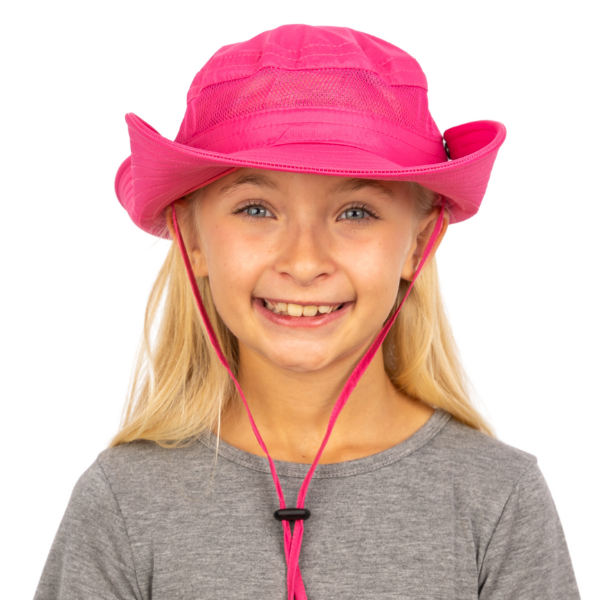
That's the job GearTOP built its hats for: a sun hoodie covers everything behind the face, and a UPF 50+ wide-brim hat like the GearTOP Navigator covers everything in front. No gap.
How to Choose a Sun Hoodie: 5 Things That Matter
1. UPF Rating
For hiking, camping, and daily use: UPF 30 is sufficient and more breathable. For fishing, boating, and alpine exposure: go UPF 50+.
2. Fabric Type
- Synthetic (polyester/nylon): Dries fast, durable, inexpensive. Gets smelly after multi-day use. Best value.
- Merino wool blend: Naturally odor-resistant, comfortable against skin. Slower to dry, more expensive. Best for multi-day trips.
3. Fit
Slightly loose beats skin-tight. The Skin Cancer Foundation notes that tight clothing can stretch and lose protection, and that loose-fitting apparel is preferable. A tight hoodie also traps heat. Look for "active" or "regular" fit.
4. Features That Actually Help
- Thumb loops: Protect the backs of your hands and keep sleeves in place. Underrated feature.
- Scuba hood: Higher neck coverage, stays in place in wind. Good for boating and ridgeline exposure.
- Ventilation: Some hoodies have mesh side panels or half-zips. Worth it for hot conditions.
5. Color (It Matters More Than You Think)
Dark or bright colors absorb UV before it reaches your skin, so they protect better than light shades (Skin Cancer Foundation). They also absorb more heat. If the hoodie carries a real UPF rating, that number matters more than the color — so pick the shade you'll tolerate in the heat.
Best Sun Hoodies by Activity (At a Glance)
The right sun hoodie depends on how hard you're working and how much reflected UV you face — breathability for running, maximum UPF for the water.
| Activity | What to Look For | Recommended UPF |
|---|---|---|
| Hiking / Backpacking | Lightweight, breathable, thumb loops | UPF 30 |
| Fishing / Boating | High UPF, quick-dry, scuba hood | UPF 50+ |
| Trail Running | Ultralight, fast-drying, minimal features | UPF 15–30 |
| Gardening / Yard Work | Durable, loose fit, decent UPF | UPF 30–50 |
| Travel / Everyday | Packable, wrinkle-resistant, odor control | UPF 30 |
The Complete Sun Protection Stack
A sun hoodie handles your body, but full protection takes four layers working together: hoodie, hat, sunscreen and UV awareness.
- Sun hoodie: Covers torso, arms, neck, ears. Choose UPF 30+ for most activities.
- Wide-brim hat: Covers face, scalp, and the gap the hoodie leaves open. GearTOP UPF 50+ sun hats extend protection forward where the hood stops.
- Sunscreen (SPF 30+): For your face, hands, and any skin the hoodie and hat can't reach. Water-resistant if sweating.
- UV index awareness: Know when the UV is dangerous. SunUp by GearTOP shows the real-time UV index, an 8-day UV forecast, and a burn-time estimate personal to you — your age, skin type, location and surroundings change that number.
To be clear, GearTOP doesn't make a sun hoodie. We make the hats that cover what a sun hoodie can't. Pick the hoodie that fits your budget and activity, add a rated UPF hat, sunscreen what's still exposed, and check the UV. That's it.
Frequently Asked Questions
Do I need sunscreen under a sun hoodie?
Generally no. A sun hoodie rated UPF 30 or higher lets through only about one-thirtieth of UV, so covered skin is well protected. The exceptions: fabric stretched tight across your shoulders or back, a wet hoodie, or extreme UV such as high altitude or a full day on open water. In those cases a layer of SPF 30+ under the fabric is cheap insurance.
What's the difference between UPF and SPF?
SPF rates sunscreen and is measured mainly against UVB, the burning rays. UPF rates fabric and measures how much total UV, both UVA and UVB, passes through it. A UPF 50 fabric lets through about 2% of UV. SPF 50 sunscreen only covers UVA well if the label also says "broad spectrum," and only if you apply enough of it.
Can I just wear a regular long-sleeve shirt?
Not if you're outside for long. A plain white T-shirt rates only about UPF 7 dry and UPF 3 wet, according to the Skin Cancer Foundation. Thin, light, loosely woven shirts let a lot of UV through. If you're outdoors for more than a short stretch in moderate or higher UV, choose fabric with a tested UPF rating on the tag.
Are cheap sun hoodies worth it?
Budget sun hoodies can be fine if they carry a real, tested UPF rating on the tag. The trade-offs are usually less breathable fabric, fewer features such as thumb loops or a fitted hood, and faster odor buildup. If you're outdoors occasionally, a budget UPF 50 hoodie beats no UPF hoodie. If you're out every weekend, paying more for breathability usually pays off.
Do sun hoodies work when wet?
They still help, but expect less protection. The Skin Cancer Foundation warns that clothing that gets wet or stretched loses some of its protective ability. A rated synthetic sun hoodie starts from a much higher UPF than cotton, so it holds up far better than a wet T-shirt. For long days on the water, keep a dry layer or add sunscreen underneath.
How long does a sun hoodie last?
There's no fixed lifespan; it depends on how often you wear and wash it. Replace a sun hoodie when the fabric visibly thins, pills enough to let light through, or stretches out at the shoulders and elbows. Hold it up to a bright window: if you can see a lot of light through the weave, UV is getting through too. Follow the care label to slow the wear.
Should I get a sun hoodie or a sun shirt (no hood)?
Get the hoodie if you hike, fish or do anything where your neck and ears are exposed for hours. Dermatologists most often find basal and squamous cell skin cancers on the head and neck, according to MD Anderson. Choose a crew-neck sun shirt only if you always wear a wide-brim hat with a neck flap, or layer under a jacket where a hood would bunch.
Can I wear a sun hoodie running in hot weather?
Yes, if you choose the right one. Look for ultralight polyester, a UPF of 15 to 30 (breathability matters more than maximum UPF when you're generating heat), and a loose fit that lets air move. Many runners find a light sun hoodie comfortable in strong sun because it shades the skin while wicking sweat. Start with shorter runs to see how you handle the heat.


Leave a comment (all fields required)