





By Greg Kowalczyk · GearTOP · LinkedIn
Quick answer: The best sun hat for fishing has UPF 50+ fabric, a brim of at least 3 inches all the way around, a chin cord that holds in boat wind, and quick-dry synthetic fabric. GearTOP's Discoverer adds removable face and neck flaps for full days on reflective water; the Navigator and Discoverer Air cover shorter trips. Rating and brim width matter most. Style comes second.
A fishing hat isn't an accessory. It's the piece of sun protection that keeps working when everything else fails.
Sunscreen sweats off. It washes off when you land a fish and wipe your face with a wet hand. Almost nobody reapplies it properly on a boat. And even when you do, the ears, back of the neck, and under-chin — the spots that get roasted while you're watching a bobber or working a fly line — are exactly where sunscreen goes on thinnest.
A UPF 50+ wide-brim hat covers those spots without reapplication. It doesn't care if you're sweating. It doesn't wash off.
Why Your Hat Choice on the Water Matters More Than You Think
Anglers take UV from two directions at once: straight down from the sky and bounced back up off the water.
On land, shade mostly solves the problem. On water it doesn't. Grass, soil and water each reflect less than 10% of incoming UV, but sea foam reflects about 25%, according to the World Health Organization. That reflected light hits your face, neck and under-chin from angles no cap brim can block. And you're out there for hours, usually straight through midday.
How fast unprotected skin burns isn't a fixed number. It depends on your skin type, age, where you're fishing, and how much light the water is throwing back at you. You don't feel it happening because UV is invisible, and the breeze off the water keeps you cool. By the time you notice the burn, the damage is done.
A hat blocks UV mechanically. The fabric is a physical barrier. It doesn't need a timer. You put it on at the dock and it protects you until you take it off.
What to Look for in a Fishing Sun Hat
UPF Rating: 50+ Is the Standard
A UPF 50 fabric blocks 98% of the sun's UV and lets 2% through, according to the Skin Cancer Foundation.
The jump from UPF 30 to 50+ matters on the water because you're dealing with hours of exposure, not minutes. UPF 30 lets through about 3.3% of UV; UPF 50 lets through 2%. That's roughly two-thirds more UV reaching your skin through the lower-rated hat. And plenty of brands slap "UPF" on a hat without a number — if there's no specific rating, assume the fabric hasn't been tested. Look for "UPF 50+" on the tag or product page.
Plain fabric is weaker than people assume: a white T-shirt rates only about UPF 7, per the Skin Cancer Foundation. An unrated cotton cap on the water is mostly decorative.
Brim Width: 3 Inches Minimum, All Around
Cancer Council Australia recommends a broad-brimmed hat with a brim of at least 7.5 cm — roughly 3 inches — and a bucket hat brim of at least 6 cm. The Skin Cancer Foundation lands in the same place with its "at least three inches" guidance. A 3-inch brim shades your face, ears, and the back of your neck. A 2-inch brim leaves your ears exposed. A cap leaves your ears, neck, and cheeks mostly in the sun.
For fishing specifically, wider is better. More brim means more coverage for the neck gap where your shirt collar ends and hat coverage begins. The tradeoff: wider brims catch more wind on a moving boat. That's where the chin cord comes in.
A dark underbrim is a nice fishing extra. Water glare is intense, and a darker surface under the brim cuts the light bouncing up into your eyes.
Chin Strap: Don't Skip This
Boat wakes, casting motion, a stiff wind on open water — your hat will try to leave. A chin cord with a cord lock is non-negotiable for boat and kayak fishing. For shore fishing, it's still worth having. Big gusts happen, and retrieving a hat from water or brush is a specific kind of frustration.
Look for an adjustable cord lock rather than a fixed strap. You want to snug it when running the boat and loosen it at anchor.
Fabric: Synthetic Wins for Water
Fishing hats get wet. Spray, rain, sweat, the occasional dunking. Cancer Council Australia notes that fabrics offer less UV protection when wet, and how much they lose depends on the fabric and how much water it soaks up. Cotton soaks up a lot. On a boat, soaked is the default state.
Tightly woven polyester and nylon absorb far less water and dry fast, which matters for comfort as much as protection. Quick-dry synthetic fabric is worth it over cotton blends.
Ventilation: Heat Is the Hat-Killer
The most protective hat in the world doesn't help if you take it off because you're overheating. Look for mesh panels, ventilation eyelets, or a breathable crown band.
Straw hats breathe naturally but are fragile, don't pack, and fall apart after a season of saltwater exposure. A performance synthetic with strategic venting is the practical middle ground.
Fishing Hat Styles: What Actually Works
A wide-brim UPF 50+ hat with a chin cord is the best all-round sun hat for fishing, and a cap is the worst.
| Style | Protection | Wind Handling | Best For |
|---|---|---|---|
| Wide Brim (3"+) | Excellent — face, ears, neck | Good with chin cord | Offshore, flats, all-day |
| Boonie/Bucket | Good — depends on brim width | Decent — lower profile | Casual freshwater, kayak |
| Hat with Neck Flap | Very good — face, ears, neck covered | Good with chin cord | Long days, high glare, running the boat |
| Ball Cap | Poor — forehead/nose only | Excellent | Not recommended alone |
| Straw Hat | Variable — check UPF label | Poor — wind catcher | Shore fishing, calm days |
The wide-brim hat is the default choice for good reason: it covers the most skin with the fewest compromises. Add a chin cord and it handles boat speed fine.
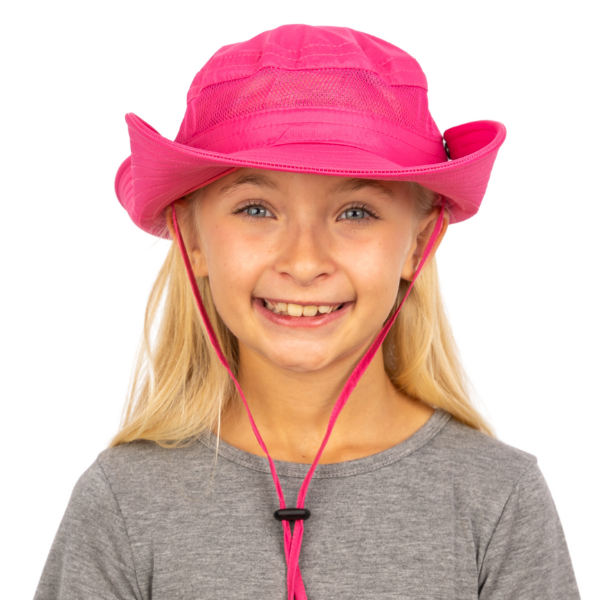
A boonie or bucket hat with a 3-inch-plus brim is a solid alternative if you want something lower-profile that still covers ears and neck. The GearTOP Discoverer Air is that kind of sun hat for fishing: UPF 50+ nylon, a 3.75-inch brim, mesh side panels and an adjustable drawcord.
Which GearTOP Sun Hat for Fishing Fits Your Trip
Pick the GearTOP sun hat for fishing by how long you're out and how much glare you're facing.
Discoverer — UPF 50+ with removable face and neck flaps — The full-coverage option. Wide brim, snap-on face and neck flaps, side mesh, quick-dry fabric and a chin strap. Best for: all-day boat trips, flats and big open water. Not ideal for: anglers who hate the covered-face look on short evening sessions. Around $22.
Discoverer Air — UPF 50+ nylon boonie with a 3.75-inch brim and mesh panels, no flaps. Best for: hot freshwater days and kayaks. Not ideal for: long days in heavy glare where you want neck fabric. Around $20.
Navigator Series — Wide-brim UPF 50+ bucket with a mesh band, chin strap and side snaps, and it packs flat. Best for: shore fishing and anglers who want one hat for the dock and the trail. Add a UPF neck gaiter on high-glare days. Around $20.
Shop the Discoverer fishing hat Browse all GearTOP sun hats
The Full Sun Protection System for Fishing
A UPF 50+ hat is the anchor of a fishing sun system, but it only covers your head, face, ears and neck.
Anglers who spend most of the season on the water tend to layer like this:
- UPF 50+ wide-brim hat — head, face, ears, neck. A GearTOP sun hat for fishing like the Discoverer covers this base.
- UPF 50+ long-sleeve shirt — arms, torso, collar zone. Covers the gap between hat brim and body.
- Broad-spectrum SPF 30+ sunscreen — face, hands, any exposed skin. Backup layer, not primary.
- UV400 polarized sunglasses — eyes and surrounding skin. Polarized lenses cut water glare.
- Neck gaiter — seals the gap between shirt collar and hat brim on high-UV days.
The principle: the more skin you cover with UPF fabric, the less depends on sunscreen reapplication. Fabric doesn't forget. Fabric doesn't miss spots.
For more on-the-water habits beyond the hat, see our older guide, 11 sun protection tips for fishing enthusiasts.
Check the UV Before You Launch
Checking the UV index before you launch tells you whether a hat alone is enough or you need the full layering system.
A UPF 50+ hat covers you the same regardless, but the forecast changes the urgency of everything else. On a moderate day, sunscreen on exposed skin is plenty. When the index runs high, reapplication and sleeves stop being optional.
The SunUp app by GearTOP shows the live UV index for your location, an 8-day UV forecast for planning trips, and a personal burn-time estimate based on your skin type and conditions. For anglers, knowing your UV window before a full day on the water turns "I should probably wear a hat" into a specific plan.
Frequently Asked Questions
What makes a good sun hat for fishing?
A good sun hat for fishing has UPF 50+ fabric, a brim of at least 3 inches all the way around, and an adjustable chin cord with a cord lock for boat wind. It should be made from quick-dry synthetic fabric rather than cotton, because fishing hats get wet, and it needs mesh venting so you keep it on in humid heat. A dark underbrim is a bonus for cutting water glare.
Is a wide brim hat better than a baseball cap for fishing?
Yes, by a wide margin. A baseball cap shades your forehead and nose and leaves your ears, cheeks and the back of your neck in the sun. A wide-brim hat shades your face, ears and neck together. On water, part of the UV also bounces up from the surface at angles a cap brim misses entirely, so a cap alone is not real sun protection for a day of fishing.
What UPF rating should a fishing hat have?
A fishing hat should be rated UPF 50+. According to the Skin Cancer Foundation, UPF 50 fabric blocks 98% of UV and lets 2% through. UPF 30 lets through about 3.3%, which is roughly two-thirds more UV reaching your skin. That gap is small over a short walk but adds up over a six-hour day on the water. Skip hats that say "sun protective" with no number.
Does a wet fishing hat still protect from UV?
A wet hat protects less than a dry one, and how much less depends on the fabric. Cancer Council Australia notes that fabrics offer less UV protection when wet, with the drop depending on fabric type and how much water it absorbs. Cotton soaks up a lot of water. Tightly woven polyester or nylon absorbs little and dries fast, which makes synthetic the practical choice for fishing.
What color fishing hat is best?
The certified UPF rating matters more than the color of a fishing hat. A light-colored hat labelled UPF 50+ has passed testing and protects as rated, and it stays cooler in strong sun. Within unrated fabrics, darker shades usually block more UV than pale ones. For anglers, a dark underside on the brim is the most useful color detail because it cuts glare reflected off the water.
How much UV exposure do fishermen get?
Fishermen get more UV than most people outdoors because they are exposed for hours and take reflected light from the water. The World Health Organization says water reflects less than 10% of UV and sea foam about 25%, on top of direct sun from above. Long trips usually run through midday, when UV is strongest, so the face, ears and neck take a large dose across a season.
Does a fishing hat need a neck flap?
A fishing hat does not strictly need a neck flap, but one helps on long days. The flap covers the strip between the brim and your shirt collar, which burns easily when you lean forward to land a fish or tie a knot. A removable flap is the most flexible option: snap it on for open water and high glare, and take it off for short evening sessions.
One Decision Before You Go
A UPF 50+ fishing hat costs less than a season of sunscreen and protects your ears and neck better than lotion ever will.
You can spend ten minutes choosing a hat, or you can spend all day reapplying sunscreen to your ears and neck. GearTOP's Discoverer is the sun hat for fishing I'd pick for full days on open water. If you want a lighter hat for hot freshwater days, the Discoverer Air or Navigator both give you UPF 50+ for around $20.
Pair either one with the SunUp UV app so you know your burn window before you launch. Hat plus UV awareness — that's the system.


Leave a comment (all fields required)