






By Greg Kowalczyk · GearTOP · LinkedIn
Quick answer: A sun visor shades your forehead and eyes but leaves your scalp, ears, back of the neck and the sides of your face exposed. It works for short, high-heat sessions like a tennis match with sunscreen on. For anything longer in strong sun, GearTOP's advice is to swap the sun visor for a UPF 50+ hat with a brim that goes all the way around.
What a sun visor actually protects — and what it doesn't
A sun visor is a brim with no crown, so it shades your forehead and eyes from above and nothing else. That's why tennis players, golfers and runners reach for them: they keep sun out of your eyes without trapping heat on your head.
But here's the coverage reality:
- Protected: Forehead, eyes, upper bridge of the nose (when facing the sun directly)
- Partially protected: Cheeks, jawline (only when standing still and facing the sun head-on)
- Not protected at all: Scalp (including any part line), tops of ears, back of the neck, sides of face when you turn even slightly
The problem gets worse with movement. A visor may look like it's shading your whole face in the mirror. But when you turn your head, tilt down to read, or step into reflected light from water, sand, or pavement, the coverage vanishes. A full-brim hat keeps shade consistent as you move.
Visor vs wide-brim hat: the coverage math
The Skin Cancer Foundation says the best sun hats have a brim of at least 3 inches that shades the face, scalp, neck, shoulders and upper back (SCF). A visor meets that bar only at the front.
MD Anderson is blunter: its guidance recommends a brim of at least 2 to 3 inches running all the way around the crown and states that "sun visors don't do any good" (MD Anderson). The same page notes dermatologists most often find basal and squamous cell skin cancers on the head and neck — exactly the zones a visor leaves open.
Then there's reflected UV, which comes up from below where no brim reaches. The World Health Organization notes fresh snow can reflect up to 80% of incoming UV (WHO), and water, sand and pavement bounce UV too. A visor does nothing about any of it.
This isn't about fashion. It's about cumulative UV dose, summer after summer, on the scalp and ears.
When a visor actually makes sense
A sun visor makes sense for short, high-heat activity where airflow matters more than full coverage. In those situations it has real advantages:
- High-heat, short-duration activity: A tennis match where you've got SPF on your scalp part and ears, a UPF shirt on, and you checked the UV index in SunUp first
- Ponytail or updo hairstyles: A visor lets you keep your hair up while still getting forehead/eye shade — though a wide-brim hat with a ponytail opening, like the GearTOP Navigator Ponytail Series, solves both
- Spectator sports: Sitting in the stands for an hour, facing one direction, with sunscreen on exposed areas
GearTOP sells a sun visor for exactly these jobs — the Jasmine Series, with a ponytail opening, velcro strap and sweatband for tennis, golf and beach days. We'd still tell you straight: for any activity lasting more than 20–30 minutes in direct sun — hiking, gardening, fishing, beach days, outdoor work — a visor leaves too much skin uncovered.
What to look for if you do choose a visor
If you do pick a sun visor, a deep front brim and a sweat-wicking band matter more than anything else on the spec sheet:
- Rated fabric: A UPF 50 fabric blocks 98% of UV, per the Skin Cancer Foundation. If a visor carries a UPF number, use it to compare. Many fashion visors carry none
- Deep front panel: A deeper front brim shades more of your face than a shallow one
- Adjustable back: Velcro or elastic closure keeps it stable in wind
- Sweat-wicking headband: The open crown already helps with heat — a wicking band keeps sweat out of your eyes
- Dark underside: A dark-colored brim underside reduces glare reflected up from bright surfaces
Then pair it with broad-spectrum sunscreen on all exposed skin — the American Academy of Dermatology says to reapply every two hours and right after swimming or sweating (AAD) — plus UPF clothing for shoulders and arms, and UV-protective sunglasses.
Why a full-brim UPF 50+ hat solves the problem
A wide-brim hat with UPF 50+ fabric closes every gap a sun visor leaves, because the brim and crown cover the whole head:
- Scalp: Covered — no burning your part line or thinning crown
- Ears: Fully shaded from the sides, not just the top
- Back of the neck: Protected by the rear brim — the most common burn spot under a visor or cap
- Face sides: Consistent shade even when you turn your head
- Low sun angles: Shade stays on your face and neck in the morning and late afternoon, not just at noon
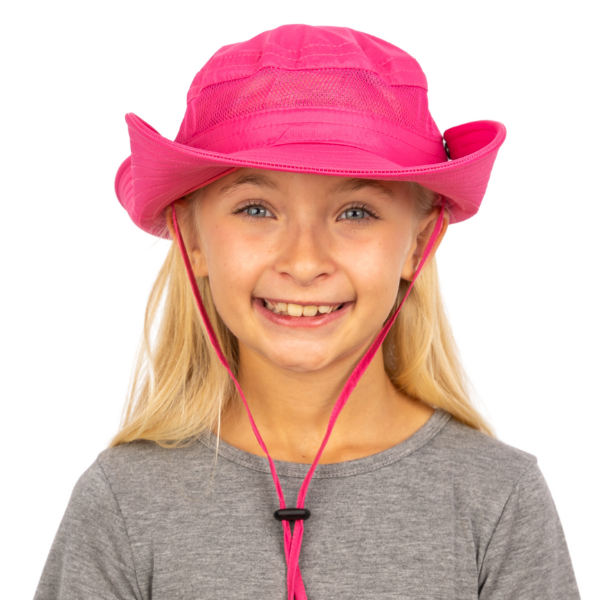
If you're replacing a sun visor, GearTOP has two picks. The Navigator is a UPF 50+ wide-brim hat with a breathable mesh band, adjustable chin strap and water-resistant, packable build. The Discoverer Air is UPF 50+ nylon with a 3.75-inch brim and mesh side panels, built for hot days. Both fold into a bag and both breathe far better than the old canvas hats most people picture.
A complete sun protection stack, not a single item
No single hat, visor or bottle of sunscreen covers everything, so treat the hat as the anchor and build around it:
- Broad-spectrum SPF 30+ sunscreen: On ears, nose, back of hands, and any skin the hat doesn't cover. Most people under-dose: the Skin Cancer Foundation says research shows people apply only 25 to 50 percent of the recommended amount (SCF). A hat doesn't replace sunscreen; it shrinks the area you need to cover
- UV-protective sunglasses: Your eyes accumulate UV damage too. Look for UV400 protection
- UPF-rated clothing: A UPF 50+ long-sleeve shirt for shoulders and arms — especially on the water where sleeves beat reapplying sunscreen every hour
- UV index awareness: Check SunUp by GearTOP before heading out. At UV 3 and above you need protection; the higher it climbs, the less a visor alone holds up. SunUp shows the real-time UV index, an 8-day forecast, and a burn-time estimate personal to your age, skin type, location and surroundings — free on the App Store
Frequently Asked Questions
Does a visor provide any UV protection for the scalp?
No. A visor has no fabric covering the crown of your head. Your scalp — including your part line, thinning areas, and the top of your head — gets zero shade from a visor. UV radiation hits it directly. If you have thinning hair, a shaved head, or a visible part line, a visor leaves one of the most sun-sensitive areas on your body completely exposed.
What is better for sun protection: a visor or a baseball cap?
A baseball cap is slightly better because it covers the top of your scalp. But both leave your ears, sides of your face, and the back of your neck completely exposed. Neither provides adequate protection for extended outdoor activity. For real sun protection, you need a hat with a brim that goes all the way around — at least 3 inches wide.
Can I just wear sunscreen under a visor instead of a full hat?
You can, but it's less reliable. Sunscreen needs reapplying every two hours and after sweating or swimming, and most people apply only a fraction of the recommended amount. A UPF 50+ hat doesn't wear off, sweat off or wash off. Sunscreen on exposed skin plus a full-brim hat is the stronger combination. Sunscreen alone under a visor leaves too many failure points.
What UPF rating should a sun visor have?
Aim for UPF 50+, which blocks about 98% of UV through the fabric. UPF 30 is still useful; below that, protection drops off quickly. Many fashion visors carry no UPF rating at all because they're designed for style, not sun safety. Look for a tested UPF number on the label, and remember the rating only protects the skin the visor actually shades.
Are visors good for hiking?
Generally no. Hiking means changing sun angles and long exposure, often two to six hours. A sun visor leaves your scalp, ears and neck uncovered the entire time, and GearTOP's own advice is to leave the visor home. Reflected UV comes up from rock, sand and water crossings. A wide-brim UPF 50+ hat with ventilation, such as the GearTOP Navigator or Discoverer Air, gives full coverage with enough airflow for all-day comfort.
Why do tennis players wear visors if they're not enough protection?
Tennis players wear visors because the open crown dumps heat during intense play, and matches run for a defined window. They pair the visor with sport sunscreen applied before and during play, and often UV-protective clothing. A recreational player can copy that setup for an afternoon on the courts, but only with diligent sunscreen on the scalp part, ears and neck, and moderate UV.
What about visors with a neck flap attached?
A visor with an attachable neck cape addresses the back-of-neck gap but still leaves your scalp and the sides of your face exposed. It's an improvement over a bare visor. If you're adding fabric anyway, a full-brim hat with removable face and neck flaps, such as the GearTOP Discoverer, gives you complete coverage in one piece.
Is a visor enough for a quick walk or errands?
For a short errand in moderate UV, a visor plus daily sunscreen on your face, ears and neck is reasonable. For anything longer, or when the UV index runs high around midday, switch to a full-brim hat. The SunUp app gives you a burn-time estimate personal to your skin type, age and location, plus the local UV index, so check it before you decide.


Leave a comment (all fields required)