





Sun-Safe Ways to Stay Active Outdoors: A UV Protection Guide for Every Activity
Outdoor physical activity is one of the best things you can do for your long-term health. The problem is that the same sunlight that draws you outside also delivers UV radiation that damages skin, accelerates aging, and increases skin cancer risk over years of cumulative exposure. The solution isn't to stop going outside. It's to understand how UV risk varies across different activities — and to match your protection to the actual exposure you're getting.
UV Exposure Risk by Activity: The Full Ranking
| Activity | UV Risk Level | Key Risk Factors |
|---|---|---|
| Open-water fishing / sailing / surfing | Very High | Water reflects 10–25% UV; extended duration; no shade |
| Alpine hiking / skiing above treeline | Very High | Snow reflects 80% UV; +4% UV per 1,000 ft elevation; no shade |
| Golf on open courses | High | 4–5 hour duration at peak UV hours; open fairways |
| Road cycling | High | Extended duration; pavement reflection; no shade cover |
| Open-terrain trail running | High | Duration; minimal shade on exposed ridgelines |
| Gardening (mid-morning) | Moderate–High | Peak UV timing; prolonged face/neck/hand exposure |
| Forested trail hiking | Moderate | Intermittent shade reduces cumulative dose |
| Outdoor sports (soccer, tennis) | Moderate | Shorter sessions; some shade access |
| Early morning / evening walks | Low | Low UV index outside 10 AM–4 PM window |
UV Protection for Fishing and Water Sports
Fishing and open-water activities sit at the top of the UV risk ranking. Water reflects 10–25% of UV rays back onto your skin, meaning you're receiving UV from above and below simultaneously — effectively increasing your total dose. A full day on the water means 6–8 hours of this doubled exposure, often during peak UV hours.
Serious anglers know this. The "fisherman's look" — sun-leathered skin, deep wrinkles on the face and neck — isn't genetics. It's decades of unprotected UV exposure accumulated on the water.
What to wear for fishing and water sports:
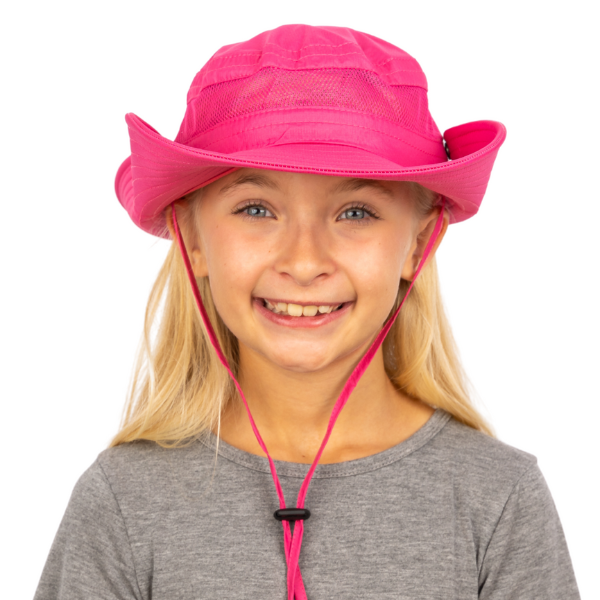
- Wide-brim hat with UPF 50+: Non-negotiable. Covers face, neck, and ears during hours of stationary exposure. GearTop's Explorer Series includes a removable mosquito net and UPF 50+ fabric — designed for exactly this use case.
- Waterproof SPF 50+ sunscreen: Apply to all exposed skin and reapply every 80 minutes — more frequently if you're in and out of the water.
- UPF 50+ long-sleeve fishing shirt: Lightweight moisture-wicking fabrics designed for heat provide full arm coverage without overheating.
- UV face gaiter or neck flap: Covers the chin and neck when the sun is at low angles — particularly important for afternoon fishing when the sun is lower and hitting the face directly.
- Polarized UV-blocking sunglasses: Reduce glare from water surface and protect eyes and periorbital skin.
UV Protection for Hiking
Hiking UV risk varies enormously depending on terrain and elevation. Forested trails with dense canopy coverage provide meaningful shade that reduces cumulative UV dose. Exposed ridgelines, open meadows, and alpine terrain above the treeline offer no shade at all — and at altitude, UV is significantly stronger.
UV intensity increases approximately 4% per 1,000 feet of elevation gain. At 8,000 feet above sea level, UV is roughly 32% stronger than at sea level on the same day. At 12,000 feet, it's nearly 50% stronger. Snow-covered alpine terrain amplifies this further, with snow reflecting up to 80% of UV rays back onto exposed skin from below.
What to wear for hiking:
- Wide-brim UPF 50+ hat: The brim shades your face, neck, and ears throughout the day regardless of sun angle — essential for full-day hikes where you're exposed for 6–10 hours.
- Long-sleeve UPF shirt: At elevation above the treeline, cover arms completely. UV penetrates cloud cover and reflects off snow even on overcast days.
- SPF 30+ facial sunscreen: Apply at the trailhead and reapply at every rest stop — or every 2 hours if you're moving continuously.
- UV-protective sunglasses: Critical at snow level — snow reflects UV directly into the eyes at intensities that can cause photokeratitis (snow blindness) on full-day alpine hikes.
UV Protection for Cycling
Road cyclists face extended UV exposure on open roads, often during peak UV hours. A 3–4 hour century ride from 9 AM to 1 PM covers both moderate and high UV intensity periods with essentially no shade. The aerodynamic constraints of road cycling (tight helmet fit) also make wide-brim hat use impractical — requiring alternative approaches.
What to wear for cycling:
- SPF 50+ face sunscreen, reapplied: Without a hat, the face is fully exposed. Use a higher SPF and set a reminder to reapply at a rest stop every 90 minutes.
- Neck gaiter or buff: Covers the back of the neck and lower face — the areas most exposed when you're in a forward-leaning road position. Pull it up during exposed sections.
- Long-sleeve UPF jersey or arm sleeves: Cover arms completely during peak UV exposure. UV arm sleeves are standard kit for serious road cyclists.
- UV-blocking cycling sunglasses: Wraparound styles block UV from the front and sides. Photochromic lenses that adjust to light levels are useful for rides that transition between shade and full sun.
UV Protection for Gardening
Gardening is one of the most underestimated high-UV activities. Most gardening happens in the morning — between 9 AM and noon, when UV is building to its peak. Sessions often run 2–3 hours without shade. Gardeners are also typically bent over or kneeling, which puts the back of the neck and the tops of the hands in direct overhead sun for extended periods.
Dermatologists see a disproportionate share of basal cell carcinomas on the backs of hands and the back of the neck in gardeners — exactly where sustained sun exposure occurs during typical gardening posture.
What to wear for gardening:
- Wide-brim UPF 50+ hat: The most practical protection for gardening. Stays on while bending, doesn't interfere with gloves or tools, protects face and neck throughout the session.
- Lightweight UPF long-sleeve shirt: Covers arms and shoulders — apply SPF 30+ to the back of hands where gloves don't cover.
- SPF 30+ on hands and face: Reapply after washing hands or after heavy sweating. Keep a tube near the garden for easy access.
UV Protection for Golf
Golf is a 4–5 hour outdoor activity typically played during peak UV hours (most tee times are morning to early afternoon). Open fairways offer minimal shade. Golfers walk an average of 4–5 miles per round — significant duration in direct sun.
A wide-brim hat is the most practical UV protection for golf — it stays on through the swing and provides consistent coverage throughout a round. Many golfers resist full-brim hats aesthetically, but the UV exposure from 18 holes of unprotected golf is significant, and the face and neck are the primary exposure zones.
Related Reading
- Beach Essentials: What to Bring
- Runner's Complete Guide to UV Protection
- Sun Protection When Fishing: 11 Tips
Frequently Asked Questions
Open-water activities (fishing, kayaking, sailing, surfing) have the highest UV exposure because water reflects 10–25% of UV rays back onto skin. Snow sports are similarly high — snow reflects up to 80% of UV. High-altitude hiking and golf on open courses are also high-exposure due to extended unshaded duration and stronger UV at elevation.
For hiking, wear a wide-brim UPF 50+ hat throughout the day, apply SPF 30+ to all exposed skin and reapply every 2 hours, wear long-sleeve UPF-rated shirts on exposed ridgelines or above the treeline, and use UV-protective sunglasses. At elevations above 5,000 feet, UV intensity is meaningfully stronger than at sea level — increase protection accordingly.
Fishing requires serious UV protection — you're typically stationary on open water for hours at peak UV times, with water reflecting UV from below in addition to direct overhead exposure. A wide-brim hat, waterproof SPF 50+ sunscreen (reapplied every 80 minutes), UPF 50+ long-sleeve shirt, UV face gaiter or neck cover, and UV-blocking sunglasses are all standard for serious anglers.
Yes — gardening typically happens during morning and midday hours at peak UV, often with prolonged exposure to hands, forearms, back of neck, and face. Gardeners frequently develop UV-related skin damage and skin cancers on exactly these areas. A wide-brim hat is the most practical protection — it stays on while bending over without interfering with gloves or tools.
Yes — UV intensity increases approximately 4% for every 1,000 feet of elevation gain. At 10,000 feet, UV is roughly 40% higher than at sea level under the same conditions. Above the treeline, there's no shade, and snow or rock reflect additional UV from below. Alpine hikers and skiers should treat UV protection as more critical — not less — despite the cold temperatures that make it feel less urgent.
The Bottom Line
Staying active outdoors is worth doing. Accumulating preventable UV damage across years of outdoor activity is not. The gap between "I go outside without protection" and "I wear a wide-brim hat and reapply SPF" is the difference between skin that reflects your lifestyle and skin that shows the cost of it. Every activity above has a practical protection solution — none of them require staying inside or giving up the activities you love.
Explore GearTop UPF 50+ Sun Protection →Sources: American Academy of Dermatology (AAD) | Skin Cancer Foundation | EPA UV Index | WHO


Leave a comment (all fields required)