





Published April 4, 2026 · 8 min read
UV Sensitivity by Skin Type: The Fitzpatrick Scale Explained
The Fitzpatrick scale was developed by Harvard dermatologist Thomas Fitzpatrick in 1975. It wasn't designed to classify skin color — it was designed to classify UV reactivity. The question it answers is: how does this skin respond when UV hits it?
That distinction matters. Two people with similar skin tones can have meaningfully different UV sensitivity profiles. And the risk that sun protection addresses isn't just sunburn — it's photoaging, pigmentation changes, and long-term skin cancer risk, all of which vary by Fitzpatrick type in ways that aren't intuitive.
The Six Fitzpatrick Skin Types
| Type | Characteristics | UV Response | Examples |
|---|---|---|---|
| I | Very fair, freckles, red or light blonde hair, blue/green eyes | Always burns, never tans | Northern European heritage, Irish, Scottish |
| II | Fair, light hair, blue or hazel eyes | Burns easily, tans minimally | Central European heritage, Scandinavian |
| III | Medium/beige skin, any eye color | Burns sometimes, tans gradually | Southern European, some East Asian |
| IV | Olive to light brown skin | Burns minimally, tans easily | Mediterranean, Latin American, some South Asian |
| V | Brown skin | Rarely burns, tans darkly | South Asian, Middle Eastern, some Hispanic |
| VI | Deeply pigmented dark brown or black skin | Never burns (or virtually never) | Sub-Saharan African, Afro-Caribbean |
The original scale used personal sun history to classify type: "how does your skin react to the first significant sun exposure in June?" — a practical question because lab measurement of skin phototype wasn't practical in clinical settings in 1975. Modern dermatology sometimes adds molecular testing, but the behavioral criteria hold up well.
What Each Type Actually Risks
Types I and II: High Burn Risk, High Skin Cancer Risk
Types I and II have low melanin density, which means UV reaches deeper skin structures with less natural filtration. The burn response is rapid — Type I can develop significant UV damage within 15–20 minutes of peak midday sun. Over a lifetime, cumulative UV exposure in these skin types drives substantially elevated rates of basal cell carcinoma, squamous cell carcinoma, and melanoma.
The Skin Cancer Foundation estimates that 1 in 5 Americans will develop skin cancer in their lifetime, with fair-skinned individuals bearing a disproportionate share. Melanoma incidence in Type I–II individuals is roughly 20–30 times higher than in Type VI.
For Types I–II: SPF 50+ daily as a baseline, reapplied every 90 minutes outdoors. Wide-brim hat whenever outside. UPF clothing for any extended outdoor activity. Sun avoidance during peak hours where possible.
Types III and IV: The "I Don't Really Burn" Trap
Type III and IV individuals are more likely to describe themselves as "not really affected by the sun" because their burn threshold is higher. This creates a false sense of protection. While they have meaningful natural UV resistance compared to Types I–II, they are not protected from:
- UVA-induced collagen damage (photoaging)
- Hyperpigmentation and melasma (actually more pronounced in Types IV–V)
- DNA damage that accumulates without visible burning
- Skin cancer — risk is lower than Types I–II but not negligible
The absence of sunburn is not the absence of UV damage. UVA penetrates regardless of melanin level. People with Type III–IV skin who work outdoors or exercise outside regularly accumulate significant photoaging even without ever experiencing a painful burn.
Types V and VI: Underdiagnosed and Under-Protected
This is the group where UV risk is most systematically underestimated — by individuals and sometimes by clinicians. The conventional narrative that "darker skin doesn't need sunscreen" has real consequences. Research from the Journal of the American Academy of Dermatology shows that Black patients are diagnosed with melanoma at later stages than white patients, with correspondingly lower survival rates. The reason isn't genetics — it's delayed detection driven by the assumption that dark skin is protected.
Acral lentiginous melanoma — the type that develops on palms, soles of feet, and under nails — affects darker-skinned populations at disproportionate rates, and typically presents in areas with no melanin benefit at all. Regular skin self-exams matter for every skin type.
Recommended Protection by Fitzpatrick Type
| Fitzpatrick Type | Minimum SPF | UV Clothing Recommendation | Key Risk |
|---|---|---|---|
| I | SPF 50+ daily | UPF 50+ for all outdoor activity | Sunburn + high skin cancer risk |
| II | SPF 50+ daily | UPF 50+ for extended outdoor time | Sunburn + elevated skin cancer risk |
| III | SPF 30–50 daily | UPF 30+ for outdoor activity | Photoaging, moderate cancer risk |
| IV | SPF 30 daily | UPF 30+ for extended outdoor time | Hyperpigmentation, photoaging |
| V | SPF 30 daily | UPF protection recommended | Hyperpigmentation, delayed skin cancer detection |
| VI | SPF 30 minimum | UPF protection recommended | Acral melanoma, delayed detection |
One Tool That Works Across All Types
Physical sun protection — a wide-brim hat, UPF clothing — works uniformly across all Fitzpatrick types because it blocks UV before it contacts skin, regardless of what the skin would do with that UV. There's no formula adjustment, no reapplication schedule, no sensitivity to get wrong.
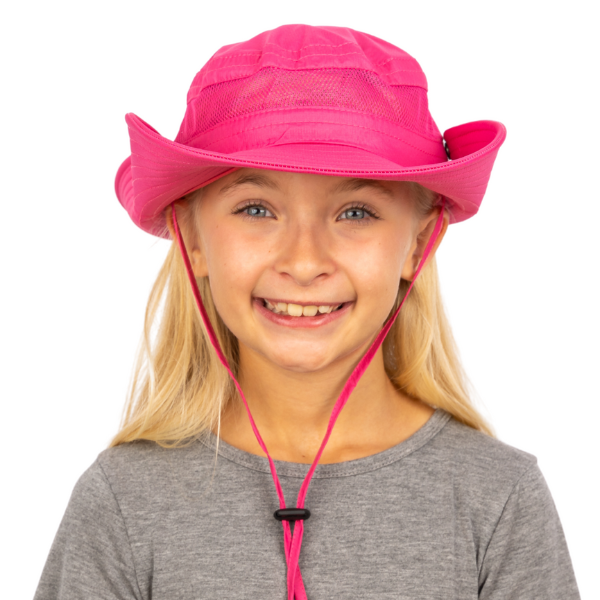
For outdoor activity specifically, a hat with a wide enough brim to shade the face and ears provides meaningful protection that sunscreen alone can't reliably deliver during exercise (sweating degrades sunscreen faster than most people account for). GearTop hats are rated UPF 50+ with a brim designed for active use — adjustable, moisture-wicking, vented. Rated 4.6/5 stars across 2,400+ verified reviews.
The SunUp app, free with GearTop purchases, tracks UV index and calculates personalized estimated exposure times based on your Fitzpatrick type — a useful reference for outdoor planning.
Shop GearTop UPF 50+ Hats →Related Reading
- UV Exposure: The #1 Cause of Premature Skin Aging
- UV Protection for Clear, Healthy Skin
- How to Choose the Best Sun Protection Clothing


Leave a comment (all fields required)