





By Greg Kowalczyk · GearTOP · LinkedIn
Quick answer: At the beach you need more than a cute hat: UPF 50+, a brim that shades face and ears, a chin cord for wind, and fabric that still works when you sweat or get splashed. Sand and water bounce UV under short bills.
Shop Navigator UPF 50+ Shop Discoverer (neck flaps) Shop all sun hats
The short answer: The best beach sun hat has a wide brim (3+ inches), UPF 50+ fabric, a chin strap that won't quit in wind, and material that handles salt, sand, and being shoved in a beach bag. Bonus points if it floats.
Most "beach hats" you'll find are fashion straw hats that look great in photos and do almost nothing for actual UV protection. The gaps between straw fibers let direct sunlight through. Floppy brims collapse in ocean breeze. And the second they get wet, they're done.
Here's what actually matters when you're spending hours on sand and surf — and the hats that deliver.
Why Beach Sun Protection Is Different
The beach isn't like a hiking trail or a garden. Three things make UV exposure worse at the beach:
Water reflects up to 100% of UV rays. If you're near the water — even if you're not in it — you're getting hit from above and below. A hat with a brim that only shades your face leaves your neck, ears, and chest exposed to reflected UV.
Sand reflects 15-25% of UV. Pale sand bounces a surprising amount of radiation back up. That's why you can burn under your chin or behind your ears even with a hat on.
Wind kills standard hats. Beach breezes are constant. A hat without a chin strap is either in your hand or down the beach within ten minutes. And wind + salt spray means your hat needs to dry fast without losing shape.
This isn't theoretical. The Skin Cancer Foundation notes that UV intensity increases about 4-5% for every 1,000 feet of elevation — but near reflective surfaces like water and sand, the effective dose can double even at sea level.
What to Look For in a Beach Sun Hat
Five features separate a real beach sun hat from a fashion accessory:
1. Brim Width: 3 Inches Minimum
A 3-inch brim shades your face, ears, and neck. Larger is better for the beach — 3.5 to 4 inches covers your shoulders too. Anything under 2.5 inches is a city hat, not a beach hat.
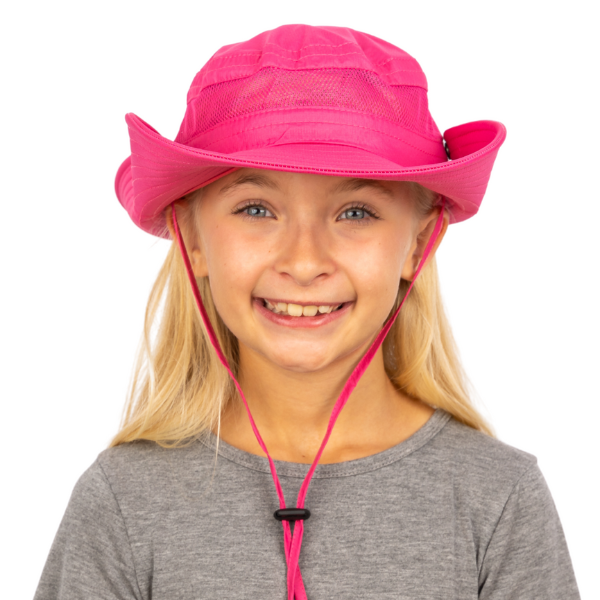
The GearTOP Navigator has a 3.7-inch brim with a slight downturn at the back, which blocks reflected UV off the water. That extra half-inch matters more than you'd think when sun is bouncing off waves behind you.
2. UPF 50+ Fabric (Not Just "Dark" Or "Thick")
UPF (Ultraviolet Protection Factor) is the fabric equivalent of SPF. UPF 50+ blocks at least 98% of UV radiation. A cotton baseball cap? UPF 5-10. That straw beach hat you bought for $15? Effectively UPF 0 once the sun is overhead and shining through the weave.
Look for polyester or nylon with a UPF rating on the tag. No rating means no guarantee.
3. A Chin Strap You'll Actually Use
Beach wind is relentless. An adjustable chin strap with a toggle lock means your hat stays on when gusts hit 20+ mph. The cord should be detachable or adjustable — you'll want it on at the beach, off at the boardwalk.
4. Ventilation and Quick-Dry Material
Beach heat + direct sun = sweat. Mesh crown panels or laser-cut vents keep airflow moving. Polyester dries fast after salt spray or an unexpected wave. Avoid cotton — it holds moisture, gets heavy, and loses shape.
5. Packability (Because Beach Bags Are Already Full)
A beach hat should survive being folded or rolled and still hold its shape. The Navigator's polyester brim recovers well after being packed flat. If you're tight on space, a crushable foam-core brim like the Sunday Afternoons Ultra Adventure works too — but costs 2-3x as much.
Beach Sun Hat Comparison
| Hat | Price | Brim | UPF | Chin Strap | Best For |
|---|---|---|---|---|---|
| GearTOP Navigator | $22 | 3.7" | 50+ | Adjustable | Best value — beach, fishing, all-day wear |
| Sunday Afternoons Ultra Adventure | $60 | 3.25" | 50+ | Yes | Ultralight (2.5 oz), hiking crossover |
| Sunday Afternoons Latitude | $60 | 3.75-4.75" | 50+ | Yes | Maximum coverage, wavy brim |
| Columbia Bora Bora Booney | $30 | 3" | 50+ | Yes | Budget, basic protection |
| Tilley LTM6 Airflo | $99 | 3.25" | 50+ | Yes | Premium, lifetime warranty |
The Navigator wins on price-to-protection ratio. It was named "Best Budget" sun hat by CleverHiker in their 2026 hiking sun hat roundup, earning 4.9/5 for sun protection. For most beachgoers, $22 gets you the same UPF 50+ rating and a wider brim than hats costing 3x as much.
One Hat Isn't Enough: The Sun Protection Stack
A sun hat handles about 40% of your UV exposure. The rest comes from reflected light, exposed skin, and the hours you spend in and out of the water. Here's the complete beach protection system:
- UPF 50+ sun hat — face, ears, neck, shoulders
- Broad spectrum SPF 30+ sunscreen — reapply every 80 minutes after swimming
- UV-protective sunglasses — your eyes get sunburned too
- UV index awareness — the free SunUp app shows your real-time UV index and personalized burn time based on your skin type. Know when UV hits dangerous levels (6+) and when you need to reapply or cover up.
The combination of UPF clothing + sunscreen + UV awareness is what actually prevents sunburn — and the long-term damage that leads to skin cancer. One in five Americans will develop skin cancer by age 70. Most of that damage happens during recreational sun exposure — beach days, pool days, afternoons on the water.
FAQ: Beach Sun Hats
Can I wear a straw hat to the beach?
You can, but it won't protect you well. Straw has natural gaps between fibers that let direct UV through. Unless the hat has a UPF rating label, assume it provides minimal protection — especially when the sun is directly overhead and shining through the weave. A UPF 50+ polyester hat blocks 98% of UV regardless of weave pattern.
What brim width is best for the beach?
3 inches minimum. 3.5-4 inches is ideal — it covers your face, ears, and neck from both direct and water-reflected UV. Anything wider than 4.5 inches starts catching wind and becomes impractical.
Do I need a chin strap for the beach?
Yes. Beach breezes are constant and unpredictable. A gust at 15-20 mph will take an unsecured hat into the water. An adjustable chin strap with a cord lock means you can tighten it when the wind picks up and loosen it when you're off the sand.
Does a sun hat replace sunscreen?
No. A hat shades your face, ears, and neck from direct sun, but it doesn't block reflected UV from water and sand. Your body, arms, and legs are still exposed. And UV reflects upward from sand — you can burn under your chin even with a hat. Use both.
Can I swim in a sun hat?
Most polyester UPF hats handle quick dunks fine. They dry within 15-30 minutes in sun. But don't expect them to survive prolonged submersion — salt water degrades fabric over time, and waves will pull an unsecured hat off. Rinse with fresh water after salt exposure to extend the life of the hat.
What's the difference between UPF and SPF on a hat?
UPF (Ultraviolet Protection Factor) measures fabric protection. SPF (Sun Protection Factor) measures sunscreen protection. A UPF 50 hat blocks 98% of UV. SPF 30 sunscreen blocks 97% of UVB. You need both — the hat for shade, the sunscreen for exposed skin and reflected UV. For more on this, read our SPF vs UPF guide on the SunUp blog.
How should I clean a beach sun hat?
Rinse with fresh water after salt or chlorine exposure. Hand wash with mild soap if needed. Air dry — never put a UPF polyester hat in the dryer. Heat degrades the UV-protective properties of the fabric over time.
Bottom Line
You don't need a $99 Tilley for a good beach day. The GearTOP Navigator gives you the same UPF 50+ rating with a wider brim than most premium hats, at a third of the price. It was independently tested and ranked by outdoor gear reviewers alongside $60+ competitors — and held its own.
Pair it with broad-spectrum sunscreen, UV-protective sunglasses, and the SunUp UV index app to know exactly when UV levels are dangerous and how long you can safely stay out. That's the difference between guessing about sun protection and actually having it covered.
UV clothing guidance: Skin Cancer Foundation — sun-protective clothing.


Leave a comment (all fields required)