





Published: April 4, 2026
UV Protection Hat Buyer's Guide: What to Look for in a Sun Hat
Walk into any outdoor store and you'll see hats marketed as "sun protection" with no UPF rating on the label. A standard cotton bucket hat might have a UPF of 5–10 — meaning it lets through 10–20% of UV radiation. That's not sun protection. That's a fashion choice.
This guide explains what UPF actually measures, how to read a hat's specifications honestly, and which features matter for real protection — not just for a walk to the car, but for hikers, anglers, outdoor workers, and anyone spending extended time in direct sun.
What UPF Actually Means
UPF stands for Ultraviolet Protection Factor. It measures how much UV radiation — both UVA and UVB — a fabric prevents from reaching your skin.
The math is simple: a UPF 50 fabric lets through 1/50th of UV radiation, or 2%. A UPF 30 fabric lets through 1/30th, or about 3.3%. The difference between UPF 30 and UPF 50+ sounds small in percentages, but it compounds over a full day outdoors.
UPF is tested by independent labs using standard ASTM or AS/NZS protocols. A hat that claims UPF 50+ without lab certification is just a marketing label. Ask for test data or buy from brands that publish it.
UPF vs. SPF: They Are Not the Same
SPF (Sun Protection Factor) measures how well a sunscreen protects against UVB rays only — the wavelengths that cause sunburn. It says nothing about UVA, which penetrates deeper into skin and is the primary driver of photoaging and DNA damage.
UPF measures protection against the full UV spectrum: both UVA (315–400 nm) and UVB (280–315 nm). When you're evaluating a hat or shirt, UPF is the only relevant number. SPF doesn't apply to fabric.
UPF Rating Table
| UPF Rating | UV Blocked | UV Transmitted | Protection Category |
|---|---|---|---|
| UPF 15–24 | 93.3–95.9% | 6.7–4.1% | Good |
| UPF 25–39 | 96–97.4% | 4–2.6% | Very Good |
| UPF 40–50 | 97.5–98% | 2.5–2% | Excellent |
| UPF 50+ | 98%+ | Under 2% | Excellent (Maximum) |
UPF 50+ is the ceiling of the standard scale. It's what you want if you're spending more than an hour outside on a day with UV index 6 or higher.
Features That Actually Matter
Brim Width
Brim width is the most underestimated spec in sun hats. A narrow brim looks good but doesn't protect your ears, neck, or lower face — the areas where skin cancer most commonly develops. Research from the Skin Cancer Foundation shows that a 3-inch brim reduces UV exposure to the nose by 66%, the cheeks by 77%, and the neck by 96%.
Under 2 inches: cosmetic protection only. 2–3 inches: decent front and back coverage. 3 inches and over, full circumference: meaningful protection all the way around. That last part matters — a hat with a wide front brim and a narrow back leaves your neck exposed.
Chin Cord
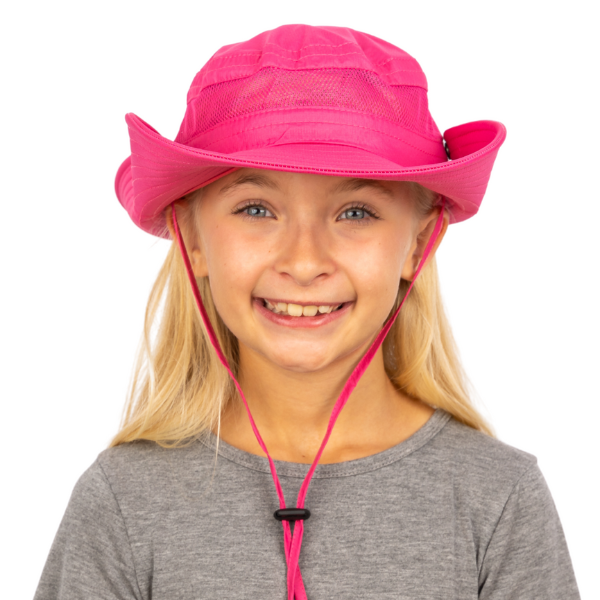
A chin cord seems like a small detail until your hat blows off a ridgeline or a boat deck. For outdoor work, hiking, and any high-wind environment, an adjustable chin cord is not optional. A hat that's in your hand isn't protecting you.
Sweatband
A moisture-wicking sweatband keeps the hat comfortable during sustained activity. Cotton sweatbands get saturated and stay wet. Look for polyester or nylon sweatbands — they pull moisture away and dry faster. This directly affects whether someone actually wears the hat for the full day or takes it off after an hour.
Fabric and Weave
Tightly woven synthetic fabrics (nylon, polyester) generally achieve higher UPF ratings than loosely woven natural fabrics. A straw hat with a loose weave may have a UPF of 10 or lower regardless of what the tag says. Dark colors absorb more UV than light colors. Wet fabric has lower UPF than dry fabric — relevant for fishing, paddling, or sweating heavily.
Weight and Packability
A hat that's too heavy or too stiff won't travel well and won't get worn. Lightweight nylon or polyester hats in the 2–3 oz range pack flat and survive being stuffed in a bag without losing shape. This matters more than it sounds — the best sun hat is the one you have with you.
Who Needs a High-UPF Hat
The short answer: anyone spending more than 30 minutes a day in direct sun. But some groups face meaningfully higher risk and should treat sun protection as non-negotiable:
- Outdoor workers — construction crews, landscapers, farmers, utility workers. Cumulative UV exposure over a career adds up. Skin cancer is the most common occupational cancer in outdoor workers.
- Hikers and backpackers — altitude increases UV exposure. At 10,000 feet, UV intensity is roughly 35% higher than at sea level. Open ridgelines and snowfields add reflected UV on top of direct exposure.
- Anglers and boaters — water reflects 10–30% of UV radiation back up at you. You're getting hit from above and below simultaneously.
- Gardeners — hours of bent-over work in direct sun, often with the back of the neck fully exposed.
- People with fair skin or a family history of skin cancer — Fitzpatrick skin types I and II burn in as little as 10 minutes at UV index 8. This group should be wearing UPF 50+ as a baseline, not an upgrade.
- People on photosensitizing medications — certain antibiotics, diuretics, and acne medications significantly increase UV sensitivity. Check the label.
The GearTop Navigator and Discoverer
The GearTop Navigator and Discoverer are both rated UPF 50+, independently tested. The Navigator has a 3.5-inch brim with full circumference coverage, an adjustable chin cord, and a polyester moisture-wicking sweatband. At 2.8 oz, it packs down flat. The Discoverer uses the same UPF 50+ fabric in a wider 4-inch brim profile for maximum coverage in open terrain.
The Navigator is rated 4.6 out of 5 stars on CleverHiker — the same score that outranks the Columbia Bora Bora (3.8/5) at the same $30 retail price. That's not a minor gap. Read the reviews and the difference in quality comes through clearly.
Shop GearTop Sun HatsRelated Reading
- Best Sun Hat for Summer
- Why Wear a Sun Hat? 12 Reasons That Actually Matter
- Sunscreen vs Sun Hats: Which Protects Better?
Frequently Asked Questions
UPF stands for Ultraviolet Protection Factor. It measures how much UV radiation — both UVA and UVB — a fabric blocks. A UPF 50 fabric lets through just 1/50th (2%) of UV radiation. Unlike SPF, which only measures UVB protection in sunscreens, UPF covers the full UV spectrum and is the correct standard for evaluating hats, shirts, and other clothing.
SPF (Sun Protection Factor) applies to sunscreen and only measures protection against UVB rays — the ones that cause sunburn. UPF (Ultraviolet Protection Factor) applies to fabric and measures protection against both UVA and UVB radiation. When buying a hat or any sun-protective clothing, UPF is the number to look for. A product can't have an SPF rating — that designation doesn't apply to textiles.
A 3-inch (7.5 cm) brim provides meaningful protection for the face, ears, and neck. Anything under 2 inches doesn't provide much coverage. Wide-brim hats in the 3–4 inch range offer the best all-around protection without becoming difficult to manage in wind. For high UV environments — beach, open water, alpine terrain — go wider. The brim also needs to be consistent all the way around, not just deep at the front.
For covered areas, UPF 50+ clothing is actually more reliable than sunscreen. It doesn't wear off, doesn't need reapplication, and doesn't wash off when you sweat or swim. But it only protects what it covers. You still need sunscreen on your face, neck, hands, and any skin the hat or clothing doesn't reach. The two work together — UPF clothing handles the bulk of your skin area, sunscreen handles exposed gaps.
UPF 50+ is the standard to target. It blocks 98% or more of UV radiation and is the highest certified rating under standard testing protocols. UPF 30 blocks 96.7%, which is acceptable for occasional or moderate outdoor use. If you're outdoors regularly, working in direct sun, or have fair skin or a history of skin cancer, UPF 50+ is the only sensible choice. Anything below UPF 15 provides marginal protection and should not be labeled or marketed as UV-protective.






Irving Horton
August 23, 2020
Looks like a great idea !