





By Greg Kowalczyk · GearTOP · LinkedIn
Quick answer: The best gardening hat has a UPF 50+ rating, a brim of at least 3 inches all the way around (4 inches if you garden during peak UV hours), a chin strap that keeps it on when you bend over, and a moisture-wicking sweatband. A baseball cap or straw hat won't cut it — you need 360° coverage for your ears, neck, and the back of your neck while you're bent over weeding or planting.
Shop Navigator UPF 50+ Shop Discoverer (neck flaps) Shop all sun hats
Why a Gardening Hat Is Different From a Hiking Hat
Gardeners spend hours bent forward — weeding, planting, deadheading. A hiking hat shades you when you're standing upright. A gardening hat has to protect the back of your neck when you're hunched over a raised bed for 45 minutes straight.
The position matters. When you bend forward, the sun hits the back of your neck, the tops of your ears, and the sides of your face at angles a standard brim doesn't cover. A baseball cap leaves your ears and neck completely exposed. A straw hat with gaps between the weave lets UV through. Even some "sun hats" taper at the sides and back — exactly where a gardener needs coverage most.
According to the Skin Cancer Foundation, the ears, neck, and scalp are among the most common sites for skin cancer — and also the areas gardeners routinely neglect. A wide-brim hat with consistent 360° coverage solves this without extra steps.
The 3 Specs That Actually Matter for Gardening
1. Brim Width: Go 4 Inches If You Can
Three inches all the way around is the minimum for meaningful face and ear coverage while upright. But gardening involves bending, kneeling, and reaching — positions where a 3-inch brim can leave gaps at the back. Four inches or more gives you coverage even when you're hunched over.
What to look for: A brim that's consistent all the way around, not just wide at the front and tapering at the sides. Hold the hat up to a window — if you can see light through the brim material itself, UV is getting through too.
2. Chin Strap: Not Optional
Wind gusts knock hats off. Bending over knocks hats off. Reaching up to prune a branch knocks hats off. A chin strap — ideally adjustable and detachable — keeps the hat in place through all of it. Look for one with a toggle or cord lock, not just a tied ribbon.
3. Sweatband: Moisture-Wicking, Not Cotton
Gardening in July is sweaty work. A cotton sweatband soaks through in 20 minutes and starts dripping into your eyes. Look for a synthetic moisture-wicking band — polyester or nylon mesh — that pulls sweat away from your forehead. Bonus: some hats have a ventilated crown with mesh panels that let heat escape.
UPF 50+ vs. UPF 30: The Difference Compounds
UPF 50+ fabric blocks at least 98% of UV radiation. UPF 30 blocks about 96.7%. That 1.3% difference sounds small, but it compounds across hundreds of gardening hours over years. For someone who gardens 3–4 hours a week from May through September, that's roughly 60–80 hours of direct sun per season. Over 10 years, the extra UV exposure from UPF 30 vs. UPF 50+ adds up to the equivalent of several full days of unprotected sun.
One thing most guides skip: UPF ratings degrade. A hat that was UPF 50+ three years ago may be closer to UPF 25–30 now, especially if it's been washed dozens of times and stretched from wear. Synthetic fabrics (polyester, nylon) hold UPF longer than cotton or linen. If your sun hat is more than 2–3 seasons old and you garden heavily, it's time to replace it.
Material Matters: What Gets Dirt, Sweat, and Wash Cycles
Gardening hats get dirty — soil, compost dust, plant residue, sweat, sunscreen residue. You need something that can handle frequent washing without falling apart or losing its UPF rating.
| Material | UV Protection | Washability | Verdict |
|---|---|---|---|
| Polyester / Nylon | Excellent (holds UPF through washes) | Easy — rinse or machine wash | ✓ Best for gardeners |
| Cotton Twill | Poor without treatment | OK, but shrinks | Not recommended |
| Straw | UV passes through gaps | Can't wash — spot clean only | Skip for gardening |
| Canvas | Decent when dense | Slow to dry, heavy | Second choice |
Two GearTOP Hats That Work for Gardening
Both are UPF 50+ certified and independently tested. The difference is coverage level:
Navigator — The Everyday Garden Hat
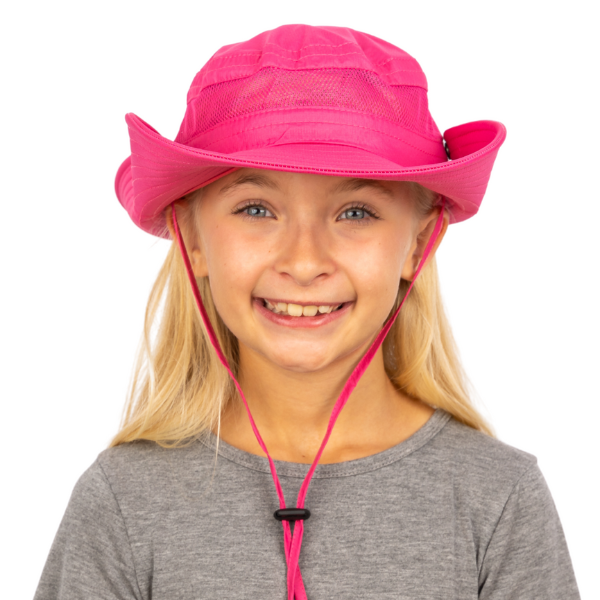
- 3.25-inch brim with consistent coverage all around
- Downward-angled brim catches low-angle morning and late-afternoon sun
- Mesh ventilation panels — you won't overheat
- Moisture-wicking sweatband
- Detachable chin strap with toggle
- Water-resistant fabric — hose spray or light rain won't soak through
- Packs flat without creasing
Best for: Daily gardening, yard work, anyone who wants solid protection without a giant brim.
Discoverer — Maximum Coverage for All-Day Gardening
- 4-inch brim with full 360° coverage
- Face and neck flaps for additional protection when bent over
- Same UPF 50+ fabric as the Navigator
- Adjustable fit system
- Removable flaps — use them on high-UV days, remove them for lighter work
Best for: All-day gardeners, peak-UV-hour gardening (11am–3pm), anyone with a history of skin cancer or sun sensitivity.
Check the UV Index Before You Head Out
The difference between gardening safely for two hours and burning in 20 minutes is the UV index. At UV 3–5 (Moderate), most people can garden for an hour or more with a good hat and sunscreen. At UV 8–10 (Very High), unprotected skin burns in under 20 minutes — and even with a hat, you need sunscreen on exposed skin and ideally shade breaks.
The SunUp app (free on iOS) shows you the real-time UV index for your location, estimates your personal safe-sun window based on your skin type, and sends alerts when UV levels spike. It's the difference between guessing and knowing.
Frequently Asked Questions
Can I just wear a baseball cap for gardening?
Not if you're out for more than 20 minutes. A baseball cap shades your forehead and nose but leaves your ears, temples, and the entire back of your neck exposed. Those are the exact areas a gardener bends toward the sun. For quick trips to grab herbs, fine. For an afternoon of weeding, you need 360° coverage.
What's the difference between a gardening hat and a fishing hat?
They overlap heavily — both need UPF 50+, wide brims, and chin straps. The main difference: fishing hats often prioritize water reflection from below (water doubles UV exposure through reflection), so they may have longer neck capes. Gardening hats prioritize coverage while bent forward and need to handle dirt, frequent washing, and flexibility for reaching and kneeling. A good hat works for both.
Does hat color matter for sun protection?
Yes — darker colors absorb more UV before it reaches your skin. A dark navy or olive hat provides slightly better protection than a white or beige hat of the same UPF rating. But the rated UPF matters much more than color. A UPF 50+ white hat blocks more UV than a dark unrated hat. Prioritize UPF rating first, then go darker if you have the choice.
How do I clean a gardening hat without wrecking the UPF?
Hand wash in cold water with mild detergent. Do not use bleach or fabric softener — both degrade UPF treatments. Air dry only; machine drying can shrink synthetic fabrics and warp brim shapes. If the hat has a removable chin strap and sweatband, detach them before washing. Most polyester/nylon gardening hats handle 20–30 washes before noticeable UPF degradation.
Can I wear a straw hat for gardening?
Only if it has a UPF-rated liner. Most straw hats have gaps in the weave — hold one up to the sun and you'll see pinpricks of light. Each one is a UV entry point. Straw also can't be washed properly, which matters when you're dealing with soil and sweat. Stick with a rated synthetic hat for gardening.
When should I replace my gardening hat?
Replace every 2–3 seasons of heavy use, or sooner if: the brim loses its shape and won't stay angled, the fabric thins or develops holes, the chin strap elastic gives out, or the sweatband won't stop smelling even after washing. UPF degrades with wear, washing, and UV exposure to the fabric itself — a 3-year-old hat isn't providing the same protection it did on day one.
Is UPF 50+ enough, or do I need sunscreen too?
A hat covers your scalp, face, ears, and neck — but UV reflects off soil, concrete paths, water features, and light-colored surfaces. Your arms, hands, chest, and any skin not under the brim still need broad-spectrum SPF 30+ sunscreen, reapplied every 2 hours. A hat and sunscreen are complementary, not either/or.
The 30-Second Gardening Hat Checklist
Before you buy — or before you head out with the one you own:
- UPF 50+? If the label doesn't say, assume it isn't rated.
- Brim at least 3 inches all around? Measure from the crown outward — not just the front.
- Chin strap present? Adjustable toggles beat ties.
- Sweatband wicks moisture? Synthetic, not cotton.
- Ventilation? Mesh panels or grommets mean you'll actually wear it in July.
- Check the UV index. Use the SunUp app — if UV is 8+, limit continuous exposure, even with a hat.
Disclaimer: This article is based on published research and product specifications. It is not medical advice. If you have a history of skin cancer, sun sensitivity, or specific dermatological concerns, consult your doctor about sun protection. Every person's skin responds differently to UV exposure based on skin type, medications, altitude, latitude, and other individual factors.
UV clothing guidance: Skin Cancer Foundation — sun-protective clothing.


Leave a comment (all fields required)