






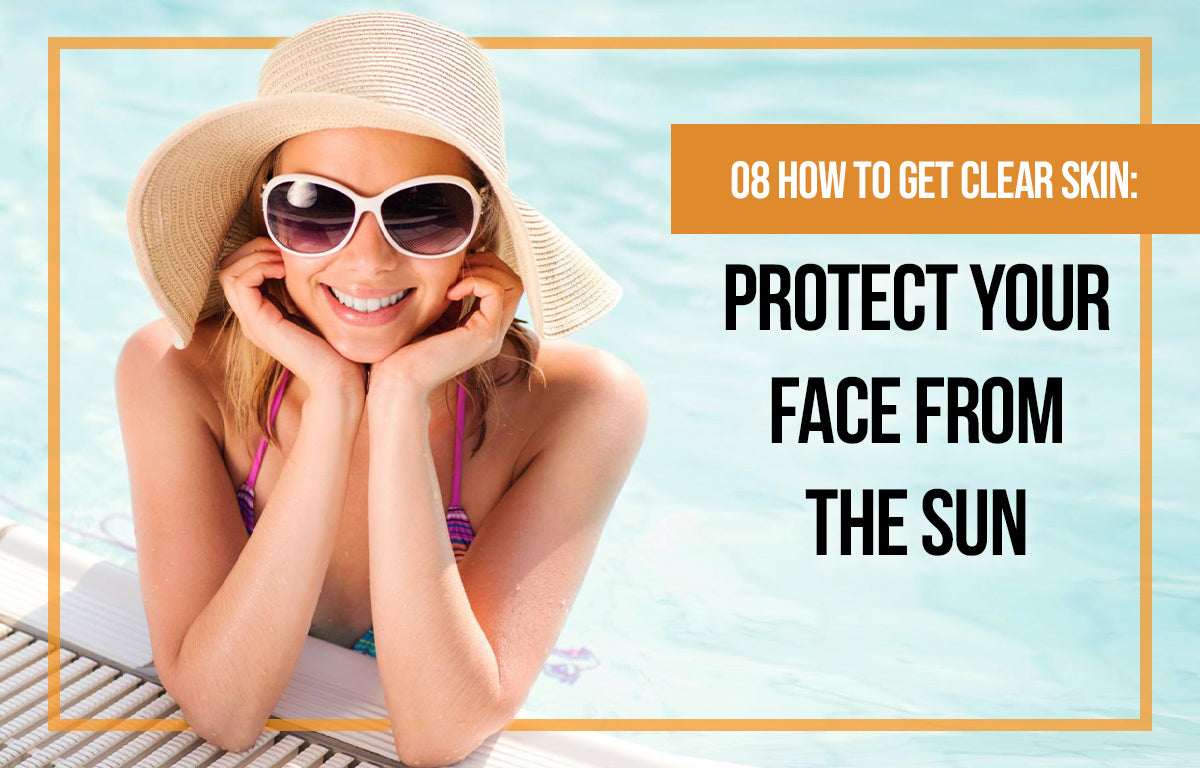
Published April 4, 2026 · 8 min read
UV Protection for Clear, Healthy Skin: What the Research Actually Shows
Most skincare advice focuses on what to add to your routine — a vitamin C serum here, a retinol there, a brightening mask on weekends. Less attention goes to what to remove from the equation. UV radiation is the single largest driver of visible skin changes: uneven tone, rough texture, enlarged pores, and premature aging. Block it consistently and your skin looks better without changing anything else.
That's not a theory. There's a randomized controlled trial that measured it.
How UV Radiation Changes the Skin
UV light affects skin through two distinct biological pathways. Understanding both explains why sun protection is not just about preventing cancer — it's about maintaining the structural integrity of your skin from day to day.
The Collagen and Elastin Problem (UVA)
UVA radiation — the longer-wave UV that penetrates deep into the dermis — activates enzymes called matrix metalloproteinases (MMPs) that break down collagen and elastin. These are the structural proteins that keep skin firm, smooth, and resilient.
Collagen provides the scaffolding. Elastin is what lets skin bounce back when you pinch it. When UV repeatedly degrades both, you get skin that looks loose, rough, and textured in ways that no surface-level treatment fully reverses. The damage goes below where topical products can reach.
UVA also generates reactive oxygen species — free radicals — that oxidize cellular structures and interfere with the skin's natural repair cycle. This is the mechanism behind the dull, uneven appearance that builds up over years of casual sun exposure.
The Pigmentation Problem (Both UVA and UVB)
Both UVA and UVB trigger melanocytes — the cells in your epidermis that produce melanin — to ramp up pigment production as a protective response. The result isn't always an even tan. More often, it's:
- Sun spots (lentigines) — discrete flat brown spots from years of cumulative UV exposure, most common on hands, face, and forearms
- Melasma — larger patches of hyperpigmentation, hormone-triggered but dramatically worsened by UV exposure
- Post-inflammatory hyperpigmentation (PIH) — dark spots that follow acne or skin injury; UV exposure makes them darker and much slower to fade
- Uneven undertone — diffuse unevenness from years of irregular melanin stimulation
None of these are serious medical problems on their own. But they're the primary reason people describe their skin as looking dull, tired, or older than they feel. And UV is the primary trigger for all of them.
What the Evidence Shows About UV Protection and Skin Clarity
The most important study here is the 2013 Hughes et al. randomized controlled trial, published in the Annals of Internal Medicine. This was a 4.5-year study comparing daily sunscreen users to occasional users. The daily group showed 24% less skin aging — measured objectively, not self-reported.
Critically, the daily sunscreen group showed no detectable increase in skin aging scores over the 4.5 years. Their skin essentially held steady while the control group continued to accumulate UV damage. This effect held regardless of age — adults in their 40s and 50s showed the same benefit as younger participants.
The practical implication: it is not too late to start. Skin continues to regenerate collagen and repair DNA damage throughout life. When UV stops being the force constantly undoing that repair, the balance tips toward improvement.
Why Skincare Products Underperform Without Sun Protection
This is the part most product-focused skincare advice skips. Many popular ingredients — vitamin C, niacinamide, kojic acid, azelaic acid — genuinely help fade hyperpigmentation. Retinoids genuinely stimulate collagen. But they work on existing damage while UV exposure is creating new damage simultaneously.
If you're using a vitamin C serum every morning and skipping SPF, you're fighting the same battle twice every day. The serum fades pigment; UV re-triggers the melanocytes; repeat. Clinical studies on brightening ingredients consistently show better results in the arms of the trial that include sunscreen alongside the active ingredient.
The formula that actually works for skin clarity:
- Stop adding new UV damage (sun protection — consistent, not occasional)
- Let skin repair what's already there (time + sleep + adequate nutrition)
- Add targeted actives to accelerate repair where needed (vitamin C, retinol, niacinamide)
Most people do step 3 first and wonder why it works slowly. Steps 1 and 2 are prerequisites.
What Blocks UV Most Reliably
| Method | UV Blocked | Best Used For |
|---|---|---|
| UPF 50+ clothing | 98% UVA + UVB | Arms, torso, shoulders — wherever clothing covers |
| Wide-brim UPF hat (3"+ brim) | ~50% reduction to face/ears vs no hat | Face, ears, back of neck — high-risk visible areas |
| Broad-spectrum SPF 30+ | 97% UVB, significant UVA (varies) | Face, neck, hands — skin not covered by clothing |
| Shade / timing (before 10 AM) | 50–80% reduction | Free; no products required |
For outdoor time — runs, hikes, days on the water — the combination of UPF clothing and a wide-brim hat handles the bulk of exposed skin without relying on sunscreen reapplication. A runner who sweats through an hour-long morning run will have significantly degraded sunscreen protection by the end; the hat's protection doesn't degrade.
GearTop's Navigator hat is rated UPF 50+ with a wide brim designed to shield the face, ears, and back of the neck — the areas where visible skin aging and skin cancer both concentrate. It's moisture-wicking, packable, and has earned 4.6/5 stars from 2,400+ reviewers. At the same price as Columbia's comparable hat (3.8/5 stars), the difference in ratings points to a difference in how it actually performs in use.
Shop GearTop UPF 50+ Hats →The Habits That Actually Stick
UV protection works on consistency, not intensity. SPF 50 worn twice a month doesn't protect skin. SPF 30 worn every single day does. The goal is to make protection automatic rather than deliberate.
- Keep sunscreen next to your phone or keys — whatever you can't leave the house without. Proximity drives the habit.
- Apply before deciding whether you'll go outside — once it's part of the morning routine, it happens regardless of the weather forecast
- Use UPF clothing for any outdoor activity over 30 minutes — removes the reapplication decision entirely for covered areas
- Wear a hat during outdoor exercise — the face accumulates more lifetime UV than almost any other body part because it's always exposed
One other thing worth knowing: UV penetrates car windows. Standard glass blocks UVB (the burn-causing wavelength) but transmits most UVA (the aging wavelength). Commuters and drivers accumulate significant UVA exposure on their left side — visible in population studies as asymmetric facial aging on the driver-side face. Sunscreen applied before driving is not excessive.
Related Reading
- UV Sensitivity by Skin Type: The Fitzpatrick Scale
- UV Exposure: The #1 Cause of Premature Skin Aging
- What Is Photoaging and How to Avoid It






Leave a comment (all fields required)