




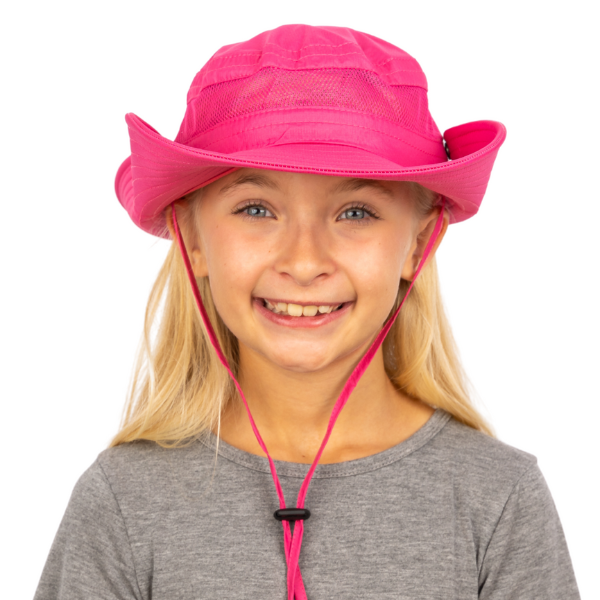


Published April 4, 2026
Why Wear a Sun Hat? 12 Reasons That Actually Matter
Most people apply sunscreen to their face and call it done. The ears get a quick swipe if they're lucky. The scalp gets nothing. The back of the neck might as well be invisible. Then they wonder why those exact spots show up first at the dermatologist.
A sun hat solves this. Not as a replacement for sunscreen — as the foundation that sunscreen should be building on top of. Here are the 12 reasons that actually hold up.
UV Protection: The Three Spots You're Missing
1. The Scalp Gets Zero SPF
Most people never apply sunscreen to their scalp, and even those who do find it impractical with hair. The scalp receives direct, overhead UV exposure during peak hours — the same intensity as the top of your shoulders. Scalp melanoma accounts for roughly 3–5% of all melanoma cases and has a higher mortality rate than melanomas elsewhere because it's often detected late. A hat is the only realistic way to protect the scalp consistently.
2. Ears and Neck Are the First to Burn
The ears and the back of the neck are consistently among the most common sites for skin cancer, yet they're the areas people apply sunscreen to least reliably. A wide-brim sun hat — 3 inches or more all the way around — keeps both areas in continuous shade without any effort on your part. A baseball cap leaves both exposed entirely.
3. UV Exposure Is Cumulative — Every Session Adds Up
Skin damage from UV isn't just from sunburns. Unprotected daily exposure — 20 minutes here, 45 minutes there — accumulates over years into photoaging, pre-cancerous lesions, and elevated skin cancer risk. A hat worn consistently across thousands of outdoor sessions reduces that lifetime total significantly. The SunUp app tracks your UV exposure in real time, so you know when your personal threshold is approaching on any given day.
Vision and Comfort: What the Hat Does That Sunscreen Can't
4. Reduces Eye Strain and Glare
UV-A and UV-B radiation damage the eyes just as they damage skin. Cataracts, macular degeneration, and photokeratitis (essentially a sunburn on the cornea) are all linked to unprotected sun exposure. A wide brim creates a physical shade line that reduces glare and lowers the total UV load reaching the eyes — even with sunglasses on. For long hiking days or time on the water, this matters for both comfort and long-term eye health.
5. Keeps Sweat Out of Your Eyes
During any high-output activity — hiking, running, fishing, yard work — sweat runs off the forehead and straight into the eyes. A hat brim redirects sweat away from the face. It's a small thing until you're three hours into a trail and can't see clearly because sunscreen-laced sweat is burning your eyes.
6. Visibility for Fishing, Hiking, and Water Activities
Polarized sunglasses cut surface glare on water. A hat brim reduces overhead glare that polarization alone can't address. For anglers reading water, or hikers navigating exposed ridgelines, the combination of hat brim and sunglasses produces significantly better visual clarity than either alone.
Health and Skin: Long-Term Outcomes
7. Protects Hair from UV Damage
UV radiation breaks down the protein structure of hair, causing dryness, brittleness, and color fading — in natural hair as well as dyed. The scalp's own hair provides some diffuse protection, but fine or thinning hair offers little barrier. A hat is the complete solution here: it protects both the hair shaft and the underlying scalp.
8. Reduces Sun-Induced Headaches
Squinting in bright light creates sustained muscle tension across the forehead, temples, and around the eyes. For many people, prolonged exposure without shade triggers headaches within a few hours. A brim that keeps the face out of direct sun significantly reduces squinting and the headaches that follow. People who are prone to migraines often find this effect especially pronounced.
9. Delays Facial Aging on Sun-Exposed Areas
Up to 90% of visible skin aging — fine lines, uneven pigmentation, loss of elasticity — is caused by UV exposure, not biological aging. The areas most affected are exactly the ones a hat shades: the forehead, temples, nose bridge, and upper cheeks. Consistent hat use over decades produces a measurable difference in how skin ages. No cream replicates this.
Practical Benefits: Why a Hat Beats Sunscreen for Reliability
10. No Reapplication — It's Always On
Sunscreen needs to be reapplied every 80–90 minutes when active, or immediately after swimming or heavy sweating. Most people don't. A hat doesn't degrade, doesn't sweat off, and doesn't require you to remember anything. Put it on when you go outside and the protection is there for as long as you wear it.
11. Continuous Neck and Ear Coverage
Even people who apply sunscreen carefully tend to miss the lower ears, the back of the earlobe, and the sides of the neck. A hat with a full brim — not a baseball cap with an open back — keeps these areas shaded continuously. The GearTop Navigator has a 4.6/5 star rating from over 2,400 customers, many of whom specifically mention coverage of the neck and ears as the deciding factor over other hats.
12. Works Across Every Outdoor Activity
The same hat works for hiking, fishing, gardening, spectator sports, beach days, and travel. It doesn't need to match the activity or require a different formula per skin type. It's the one piece of sun protection that transfers seamlessly from one outdoor context to the next without any adaptation.
What a Sun Hat Actually Covers vs. What a Baseball Cap Misses
| Area of Head/Face | Wide-Brim Sun Hat (3"+ brim) | Baseball Cap |
|---|---|---|
| Top of scalp | Fully covered | Fully covered |
| Forehead | Shaded by brim | Partially shaded |
| Nose and upper face | Shaded by brim | Minimal shade |
| Ears | Fully shaded | Fully exposed |
| Sides of face/temples | Shaded | Fully exposed |
| Back of neck | Shaded (full brim) | Fully exposed |
| Lower neck/nape | Shaded | Fully exposed |
Baseball caps protect the top of the head. Sun hats protect the head, face, ears, and neck together. For anyone spending meaningful time outdoors, that coverage gap is the difference between a hat that's decorative and one that's doing actual work.
Pair your hat with the SunUp app to track UV index in real time and know exactly when your exposure is approaching your daily limit. The hat handles the structural protection; the app handles the data.
Shop GearTop Sun HatsRelated Reading
- UV Protection Hat Buyer's Guide
- Best Sun Hat for Summer
- Sunscreen vs Sun Hats: Which Protects Better?





Leave a comment (all fields required)