




Published: April 4, 2026
Fishing Gear Essentials for Beginners: What You Actually Need on the Water
Fishing gear lists spiral fast. Veteran anglers accumulate tackle over years and it shows — a tackle box the size of a carry-on, four rod options for different conditions, a fish finder worth more than some cars. None of that is where you start.
Beginners need to get on the water with gear that works, doesn't break, and doesn't require a deep knowledge base to use. This list is what actually matters for your first season. It also includes the sun protection gear that most beginner guides leave to a footnote — and that most new anglers learn to regret leaving home.
The 10 Essentials
1. Rod and Reel Combo (Spinning Setup)
A spinning rod and reel combo is the right starting point for nearly every beginner. Spinning reels sit below the rod, have an open-face spool, and are far more forgiving than baitcasting reels — less backlash, easier to cast light lures and bait, and the mechanics are easier to understand and maintain.
For freshwater fishing (bass, trout, panfish), a medium-light 6 to 7-foot spinning combo handles the widest range of conditions and species. Brands like Ugly Stik, Shakespeare, and Zebco all offer reliable combos in the $40–$80 range. Don't over-invest until you know how much you'll actually fish — but don't go so cheap that the reel fails after two outings.
Match your rod power to your target fish. A medium-heavy rod for bass and pike, medium-light for trout and panfish, ultra-light for small stream fishing. The combo packaging usually specifies recommended line weight and lure weight — stay within those ranges and the setup will perform as designed.
2. Terminal Tackle (Hooks, Weights, Swivels)
Terminal tackle is everything at the end of your line — hooks, sinkers, swivels, and bobbers. Start small and simple. A mixed hook assortment in sizes 4 through 10 covers most freshwater species. Egg sinkers or split-shot weights in a few sizes. A handful of barrel swivels to prevent line twist when using spinning lures or live bait rigs.
You will lose terminal tackle regularly — it snags on structure, gets cut off by fish, and breaks at knots. Buy in bulk packs rather than individually. A combined assortment kit from any tackle shop covers the basics for less than $15 and lasts a full season of casual fishing.
3. Bait and Lures
Live or natural bait outperforms artificial lures for most beginners because it generates natural scent and movement that predatory fish respond to instinctively. Nightcrawlers work for a wide range of freshwater species. Minnows for bass and walleye. Crickets and waxworms for panfish. Ask the bait shop what's working in the specific body of water you're fishing — local knowledge beats any online advice on this.
Once you have some confidence in your casting and basic technique, add a few artificial lures: a plastic worm or tube jig for bass, a small inline spinner (Mepps, Blue Fox) for trout and perch. Lures require more technique to fish effectively, but they're reusable and don't require live bait storage.
4. Polarized UV400 Sunglasses
Polarized lenses are not just sun protection — they're a genuine fishing tool. They cut the glare from the water surface and let you see below it: fish in shallow water, structure, weed beds, drop-offs. On a clear day in shallow water, the difference between polarized and non-polarized is dramatic. Anglers who've fished with polarized glasses for years genuinely cannot imagine fishing without them.
The UV400 rating means the lenses block 99-100% of UV radiation up to 400nm — both UVA and UVB. This is separate from polarization. Check that your lenses carry both ratings. Amber and copper tints perform well in low-light and partly cloudy conditions; grey tints are better for bright, high-sun fishing. Budget polarized options from Cocoons or Under Armour start around $25-$30 and perform well for beginners.
5. Wide-Brim UPF 50+ Hat
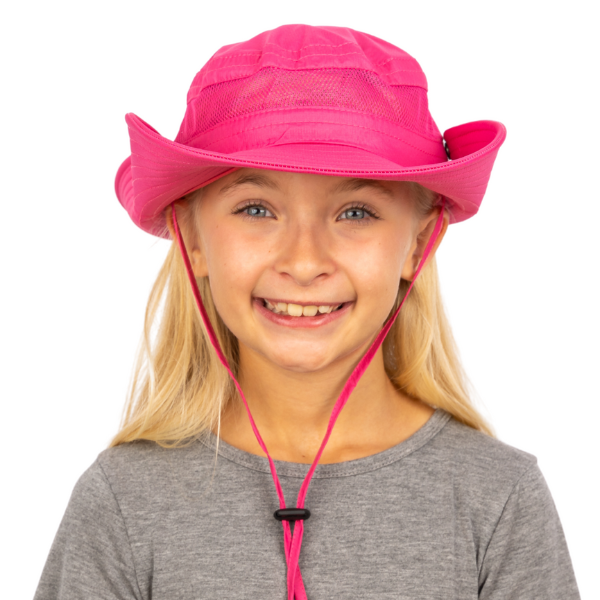
This is where most beginner gear lists substitute a fishing-branded baseball cap and call it done. That's a mistake. A cap shades your forehead and that's the extent of it. Your ears, the sides of your face, and the back of your neck are completely unprotected — and these are among the most common sites for skin cancer in people who spend significant time outdoors.
A wide-brim hat (3 inches minimum, all the way around) with a UPF 50+ rating and a chin cord is the correct tool. The chin cord matters on any moving boat — wide brims catch wind at speed. The GearTop Navigator has a 4.6/5 rating on CleverHiker and comes with everything you need: ventilated crown for heat management, moisture-wicking sweatband, adjustable chin cord, and UPF 50+ fabric. At $30 it costs the same as a Columbia hat rated 0.8 points lower.
6. Needle-Nose Pliers
Get pliers before your first trip. They do three things: remove hooks from fish (especially deeply-set hooks in the throat), crimp split shot sinkers onto line, and cut fishing line when needed. Without pliers, you're using your fingers on a hook set in a fish's jaw — this ends with a hook in your hand more often than you'd expect.
Stainless steel fishing pliers with a line cutter built in are available for $10-$15. Put them on a retractable zinger clip attached to your vest or pack so they're always accessible. Losing pliers overboard or digging for them while a fish is on the line is the kind of frustrating that's easily prevented.
7. Circle Hooks for Bait Fishing
Circle hooks are designed to hook the corner of the fish's mouth rather than the throat or gut. For catch-and-release fishing, this matters — gut-hooked fish have significantly lower survival rates after release. For keeping fish, the difference is in the technique: with a J-hook you set the hook aggressively when you feel a bite; with a circle hook you don't. Let the fish run briefly, then apply steady pressure and reel — the hook sets itself in the corner of the mouth as the fish turns away.
Circle hooks have a narrower gap that requires the point to rotate into the jaw rather than embed on contact. Beginners who've never used either hook tend to find circle hooks easier to use correctly because the temptation to jerk-set the hook works against you with J-hooks and is simply neutralized with circles.
8. UPF Fishing Gloves
Hands are one of the most UV-exposed parts of your body during a fishing trip. They're extended forward while casting, constantly wet (which means sunscreen degrades faster), and frequently re-exposed as you handle lures, bait, and gear. Sunscreen on hands is the first thing that disappears.
UPF 50+ sun gloves designed for fishing solve this without interfering with the activity. Touch-screen compatible gloves let you use your phone, a fish finder, or tackle apps without taking them off. GearTop's sun gloves cover the back of the hand while leaving fingertip access for knot-tying and hook handling. They're a small addition to any fishing kit that pays off on a full-day trip in full sun.
9. Picaridin Insect Repellent (Not DEET)
DEET is the most widely used insect repellent in North America and it works well. It also dissolves nylon, spandex, synthetic fishing line, and some rod coatings. For fishing — where you're handling synthetic lines and wearing technical fabrics all day — this is a genuine problem. DEET applied to your hands will degrade monofilament and fluorocarbon line on contact.
Picaridin 20% provides equivalent protection to DEET 30-40% against mosquitoes and biting insects, and it's safe on synthetic materials. It's less greasy, has minimal odor (relevant when fish can detect scent), and won't damage gear. Sawyer's Picaridin and Natrapel are widely available at outdoor retailers and most pharmacies. Make the switch before your first trip — it costs the same and eliminates a real problem.
10. Basic First Aid Kit
Fishing-specific injuries are predictable: hook punctures, cuts from fish fins (especially perch and catfish), line cuts, sun exposure, and insect stings. A compact first aid kit covers the basics: adhesive bandages in several sizes, antiseptic wipes, tweezers for splinters and small hook removal, antihistamine tablets for insect reactions, and ibuprofen.
For hook removal specifically: a deeply embedded hook (barb past the skin) is best handled by a medical professional if you're near one. For a hook just under the skin with the barb accessible, the string-pull technique works — loop fishing line around the bend of the hook, press the hook eye down against the skin to disengage the barb, then pull the string sharply parallel to the skin surface. Clean immediately with antiseptic. If you're uncertain, leave it for a doctor.
Sun Protection: Non-Optional Gear
Most beginner gear guides treat sun protection as a lifestyle tip, not a gear item. That framing is wrong. A fishing trip is typically 6 to 10 hours of direct sun with no shade, on reflective water that bounces 25% of UV back at you from below. You're receiving direct UV from above and reflected UV from below, simultaneously, for the entire duration of the trip.
The minimum protection kit for a full day on the water:
- UPF 50+ wide-brim hat (not a cap)
- UPF 50+ long-sleeve fishing shirt
- SPF 50 water-resistant sunscreen — applied before launch, reapplied every 80 minutes
- UV400 polarized sunglasses
- UPF 50+ gloves for hand protection
Check the UV index before you head out. The SunUp app gives you real-time UV index for your exact location, a 48-hour UV forecast, and calculates safe exposure time based on your skin type. On a summer day with UV index 8 or higher, this data changes how you plan your shade breaks and reapplication schedule.
Beginner Gear Checklist
| Item | Why You Need It | Budget Tip |
|---|---|---|
| Spinning rod and reel combo | Most versatile, easiest to learn technique | $40–$80 for a reliable combo (Ugly Stik, Shakespeare) |
| Terminal tackle assortment | Hooks, weights, swivels — you will lose these | Buy assortment kits, not individual packs; $10–$15 covers a season |
| Bait or lures | You cannot fish without something on the hook | Start with live bait (nightcrawlers); ask local bait shop what's working |
| Polarized UV400 sunglasses | See below the water surface; protect eyes from UV | Decent polarized options start at $25; check for UV400 rating |
| Wide-brim UPF 50+ hat | Face, ears, neck protection for a full-day trip | GearTop Navigator ($30) — 4.6/5 CleverHiker, UPF 50+, chin cord included |
| Needle-nose pliers | Hook removal, line cutting, crimping split shot | $10–$15 stainless fishing pliers; add a retractable zinger clip |
| Circle hooks | Reduces gut-hooking, improves catch-and-release survival | Slightly more than J-hooks but worth it; Gamakatsu and Owner make reliable options |
| UPF 50+ sun gloves | Hand UV protection; sunscreen degrades fast on wet hands | GearTop touch-screen compatible gloves — cover the back of the hand while casting |
| Picaridin repellent (20%) | Insect protection that doesn't damage synthetic gear or fishing line | Sawyer Picaridin or Natrapel — same price as DEET, safe on gear |
| Basic first aid kit | Hooks, cuts, stings, and sun exposure are predictable fishing injuries | A pre-assembled compact kit covers the essentials for $15–$20 |






Leave a comment (all fields required)